Roaming Charges in South Africa: How to Avoid Paying 13x More in 2026

Written by: James Harrington


12 min read
Table of content
Quick Answer: roaming charges
South Africa isn't covered by any "roam like at home" deal, and the rates reflect that. EE, AT&T, and Telstra contracts all apply full international rates once your phone connects to a local network at the airport. That means real money, and it starts before you reach the baggage carousel.
Travel eSIMs are the cleanest fix for roaming charges. Hello Roam's South Africa plan activates instantly on your existing device, needs no physical SIM swap, and lets you run local 4G data while keeping your home number live for 2FA texts and family calls. No airport counter. No RICA registration required. Travellers new to eSIM technology can find device compatibility details and a step-by-step walkthrough in Hello Roam's What Is An Esim guide.
The full cost breakdown is in Section 3. The price gap between carrier roaming and an eSIM plan is large enough to fund a decent dinner in Cape Town.
What Are Roaming Charges and Why Does South Africa Cost More Than You Expect?
Roaming charges are the fees your home carrier applies when your phone connects to a foreign network outside its own infrastructure. Your carrier doesn't own the towers in Johannesburg, so it pays Vodacom or MTN for access, marks up the wholesale cost, and passes that on to you.
South Africa makes this particularly expensive for British, American, and Australian travellers because the country isn't part of any preferential roaming zone. The EU's preferential roaming framework doesn't extend here. There's no equivalent bilateral agreement between South Africa and the UK, US, or Australia that keeps rates down. You're paying full international markup every time.
The billing starts the second your phone hits a foreign network, whether you make a call or not. Background data is the quiet problem most travellers miss. Apps sync, notifications push, and OS updates try to download as soon as your phone finds a signal. A few minutes of that on pay-per-use billing can rack up charges you won't see until the statement arrives.
Incoming calls are another trap. Many carrier plans bill you for receiving calls while abroad, not just making them. It varies by plan, but assuming incoming calls are free is a mistake that catches a lot of travellers mid-trip.
This guide focuses on practical cost guidance for UK, US, and Australian visitors to South Africa. Cape Town, the Kruger National Park, or the Garden Route: all three demand a reliable data connection, and knowing the costs before you land is how you stay in control of them.
How Much Does Roaming Cost in South Africa?

Four cost tiers exist for staying connected in South Africa. The differences between them aren't small adjustments. They're enormous.
Pay-per-use is the danger zone. AT&T and Verizon without a day pass charge $10 per MB of data. A single minute of video streaming uses roughly 18MB, which works out to around $180. That's not a typo.
Carrier day passes let you use your domestic plan abroad at a flat daily fee. Convenient if you forget to plan ahead, but the daily costs compound quickly across a two-week trip.
Travel eSIMs offer a dedicated South Africa data package at a fraction of carrier rates. Buy before you fly, activate remotely, and keep your existing SIM in place.
Local SIMs are the lowest per-GB option. Under South Africa's RICA registration law, you'll need your passport and about five minutes at the point of purchase.
SolutionAT&T Day Pass
Est. Cost (14-day trip)$168
Data IncludedDomestic plan
Hassle LevelLow
SolutionVerizon TravelPass
Est. Cost (14-day trip)$140
Data IncludedDomestic plan
Hassle LevelLow
SolutionEE Roam Anywhere
Est. Cost (14-day trip)~R70
Data IncludedDomestic plan
Hassle LevelLow
SolutionHello Roam eSIM 10GB
Est. Cost (14-day trip)~$24
Data Included10GB 4G
Hassle LevelVery Low
SolutionHolafly Unlimited eSIM 15 days
Est. Cost (14-day trip)~$57
Data IncludedUnlimited (throttled)
Hassle LevelVery Low
SolutionVodacom local SIM 30GB
Est. Cost (14-day trip)~$11
Data Included30GB 4G
Hassle LevelMedium (RICA)
SolutionT-Mobile free roaming
Est. Cost (14-day trip)Free
Data Included2G only
Hassle LevelLow
T-Mobile's 2G option handles WhatsApp text and a static map pin. It won't manage live navigation or video calls. The table's standout figure is that 13x cost gap between a Verizon TravelPass and a Vodacom SIM for the same 14-day trip.
How Much Are Roaming Charges Per Day?
Per-day roaming charges vary more than you'd expect, and a few billing quirks can double your bill before you realise what's happened.
AT&T's International Day Pass costs $12 per day and activates automatically the first time you use your phone abroad on any given calendar day. You don't opt in. It triggers on first use. Verizon's TravelPass works on the same logic, at $10 per day per line, also auto-activating rather than requiring a manual switch.
EE in the UK sits outside its Go Roam zone list for South Africa. The standard plan won't cover you here. The Roam Anywhere add-on costs roughly R5 per day. Vodafone UK without an international bolt-on charges around R6 per MB of data, which makes any sustained browsing session financially impractical.
T-Mobile's free South Africa roaming is capped at 256 kbps, which is 2G territory. Text messaging over WhatsApp stays workable. Streaming, navigation, and calls over data don't.
One billing detail catches a lot of travellers off-guard: day pass charges reset at midnight in your home country's time zone, not 24 hours from when you first used your phone. A late-night arrival at OR Tambo can trigger two separate daily charges within a few hours of landing.
How Much Does MTN Roaming Cost for International Visitors?

Your phone might show 'MTN' in the top corner of your screen. That doesn't mean you're paying MTN South Africa for your data.
International visitors connect to either MTN or Vodacom as the local host network, but the price they pay is set entirely by their home carrier. MTN South Africa sets wholesale inbound roaming rates for partner operators, who then apply their own retail markup before billing you. The network name on your status bar tells you who's carrying your signal. It tells you nothing about who's writing your invoice.
According to cellc.co.za, Cell C disabled inbound data roaming from April 2025, citing bill shock concerns for South African subscribers travelling abroad. Arranging data before you leave home is a more reliable strategy than trusting whatever agreement your home carrier has with a local network at any given moment.
For coverage quality, both MTN and Vodacom deliver solid 4G LTE across major cities and primary tourist routes. Vodacom holds a marginal edge on the Garden Route and coastal areas. MTN performs well in Johannesburg and parts of the eastern regions. Both networks have been expanding 5G rollout in Johannesburg and Cape Town since 2025, though coverage remains patchy beyond core urban zones.
Network strength matters less than you'd think once you're off the main roads.
Three Ways to Stay Connected in South Africa
Trip length is the simplest filter. Use it first.
Three options cover most visits to South Africa, each sitting at a different point on the cost-versus-convenience spectrum.
Carrier roaming pass. No setup, no SIM swap, your home number rings normally. The daily rates discussed above accumulate fast past the three-day mark. Under three days, zero friction makes a legitimate case. Past that threshold, the cost overtakes the alternatives.
eSIM. Buy a plan before departure and activate it over your home WiFi. Data is live when you land, and because you can set it up at the gate before boarding, there's genuinely nothing to do on arrival. Because an eSIM runs alongside your physical SIM in a dual-SIM configuration, your home number stays active simultaneously for incoming calls, bank 2FA texts, and anything else tied to your regular number. No RICA registration required at any stage. Requires an eSIM-capable handset: iPhone XS and later, Samsung Galaxy S20 and later, and Pixel 3 and later.
Local SIM. The cheapest per-gigabyte option in South Africa, requiring RICA passport registration at the point of sale. It's a brief in-person step at an airport counter, a legal requirement under South African law rather than an optional formality. Single-SIM devices lose home number access entirely while the local card is installed.
The choice narrows quickly. Under three days, the carrier pass wins on convenience. Four or more days, eSIM or local SIM wins on cost. If your home number is essential for continuous 2FA or family calls, eSIM is the only option that keeps both numbers active at once.
WhatsApp voice and video is the de facto communication standard across South Africa. Any data plan you choose effectively doubles as a free local calling solution, which matters when coordinating with guides, drivers, or accommodation throughout a trip.
eSIM for South Africa: Instant Activation with No RICA Required
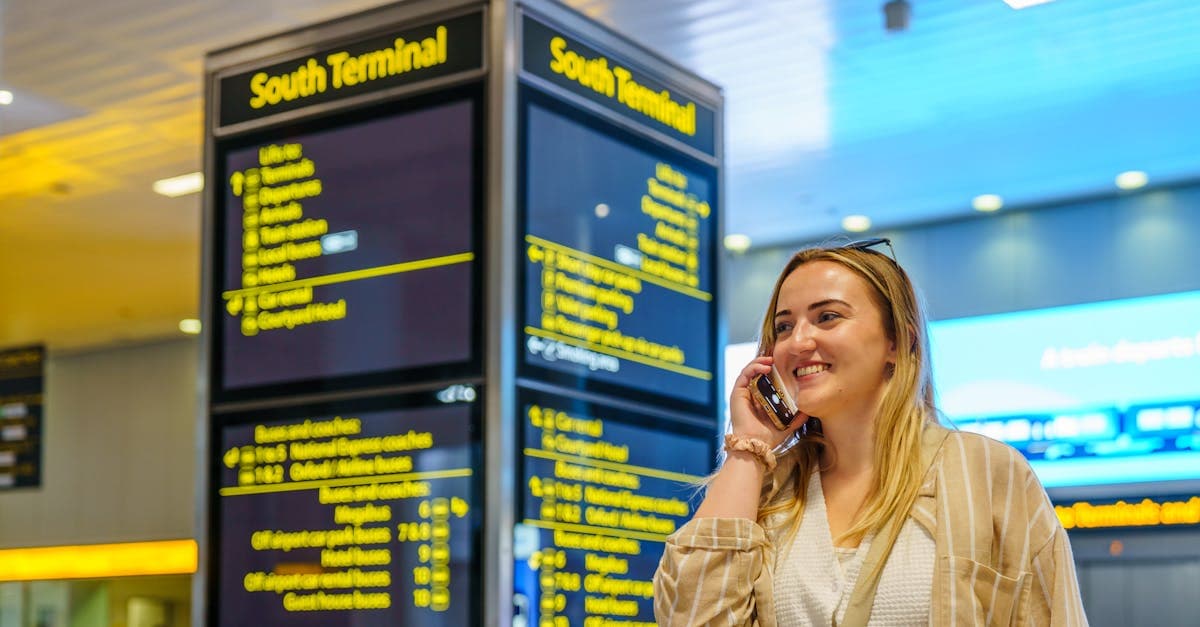
No physical card. No SIM ejector tool. No airport kiosk.
An eSIM is a digital SIM embedded in your device, activated remotely via a QR code or provider app. Activation typically takes under five minutes from purchase to live data. Set it up at home before departure and your South African plan is running the moment you step off the plane at OR Tambo or Cape Town International, before you've cleared passport control.
According to vodacom.co.za, South African eSIM plans run on Vodacom or MTN's 4G LTE infrastructure, covering Cape Town, Johannesburg, Durban, the Garden Route, and the Kruger corridor at genuine high speed. Rural and game reserve areas are thinner on signal regardless of provider, but urban performance is broadly comparable to a local SIM.
Pricing across the market is competitive. Airalo's 30-day South Africa plan is priced at the rate cited in the comparison table above. Holafly's 7-day unlimited option costs around $34 but throttles after sustained heavy use. Nomad's 30-day plan runs around $28. Saily offers entry-level coverage from around $2.99 for 1GB, suited to travellers who mainly need messaging and maps.
Hello Roam covers both Vodacom and MTN networks, offers transparent data pricing with competitive allowances, includes 24/7 customer support, and requires no RICA registration at any point in the process. For travellers uncertain which network performs better in their specific destination, dual-network access removes the guesswork.
The RICA exemption is a practical advantage rather than a marketing claim. No store visit, no passport presentation, and no risk of a SIM being blocked due to a registration error at point of sale.
The dual-SIM benefit matters most for anyone relying on their home number: bank security alerts, 2FA codes, and incoming family calls continue arriving on the home SIM while the eSIM carries all South African data traffic simultaneously. That split isn't possible on a single-SIM device running a local physical card.
Verify your handset supports eSIM before purchasing any plan. iPhones from XS onward, Samsung Galaxy S20 onward, and Pixel 3 onward are generally eSIM-capable, but checking your settings takes thirty seconds and avoids a refund conversation.
Buying a Local SIM Card in South Africa: What the RICA Requirement Means for Tourists
Every SIM card sold in South Africa must be registered against a valid passport at the point of sale. That's not a formality you can work around: it's a legal obligation under the Regulation of Interception of Communications Act, known as RICA. Unregistered SIMs are eventually blocked under South African law.
Registration is straightforward. At OR Tambo International in Johannesburg and Cape Town International Airport, Vodacom and MTN both operate counters in the international arrivals halls. The agent scans your passport details and activates the SIM on the spot. The whole process takes around five minutes. The card itself costs between R0 and R5.
Data bundles are where the value lies. According to vodacom.co.za, Vodacom's 10GB bundle for 30 days runs around R99, approximately $5.40 at mid-2025 exchange rates. According to mtn.co.za, MTN prices its equivalent similarly. For heavier data users, the 30GB bundles referenced in the earlier cost comparison come in at roughly ten to eleven dollars for the same validity period.
Coverage follows a familiar split: Vodacom performs slightly better on the Garden Route and coastal sections of a trip, while MTN holds up well in Johannesburg and parts of the east. Cape Town, Durban, and the Kruger corridor are reliably served by both.
The core trade-off is transparent. A local SIM gives you the cheapest per-gigabyte data available in South Africa, in exchange for one in-person registration step at the airport. On a single-SIM phone, inserting the local card also means losing your home number for the duration. For most holiday travellers, that's an acceptable exchange. For anyone relying on their home number for continuous 2FA, it isn't.
WiFi in South Africa: Load-Shedding, Safari Dead Zones and Urban Hotspot Reality
Sandton delivers solid 4G. Kruger delivers very little.
WiFi across South Africa divides cleanly between urban centres and everywhere else. Cape Town's City Bowl, Sea Point, and the Waterfront typically run between 20 and 100 Mbps at hotels and cafes. Johannesburg's Sandton and Rosebank have enterprise-grade infrastructure that holds up under load. Durban and Stellenbosch are reliable in the tourist zones that matter.
The airports sit somewhere in the middle. OR Tambo and Cape Town International both offer free WiFi, but speeds throttle after an initial allowance. Fine for checking a confirmation email. Insufficient for downloading map packs or large files before you head out.
Then there's load-shedding. Eskom's rolling power cuts disrupted hotel and cafe WiFi severely throughout 2023 and 2024, forcing connections offline for hours at a stretch. The situation improved in 2025, but the risk hasn't disappeared. Urban 4G LTE, averaging 35 to 50 Mbps on download, doesn't depend on the local power grid and becomes the consistent fallback when fixed connections drop.
Game reserves are a different problem entirely. Kruger, Sabi Sands, Hluhluwe, and Addo all have poor to non-existent signal regardless of which carrier or plan you carry. Some lodges have adopted Starlink, but data caps are common and the service runs inconsistently. Don't rely on lodge WiFi for navigation, ride-hailing, or emergency contact.
Download Google Maps or Maps.me packs for South Africa and any reserves before entering low-signal zones. Mobile data isn't optional on this trip. It's what keeps Uber running, navigation live, and communication intact when the hotel connection drops at Stage 4.
How Do I Avoid Roaming Charges in South Africa?

Turning data roaming off takes less than a minute. Getting it wrong costs the daily rate mentioned earlier, multiplied across every day you're away. Here's the sequence that prevents roaming charges entirely.
- Switch off data roaming before boarding. iOS: Settings > Mobile Data > Data Roaming. Android: Settings > Network > Mobile Network. Airplane mode isn't a reliable substitute since devices reconnect automatically on landing.
- Check whether your carrier auto-activates day passes. AT&T and Verizon both trigger a daily charge the first time your phone touches a foreign network, even without active use. You can disable this in your account settings before departure.
- Purchase a travel eSIM before you fly and activate it on home WiFi. Data is live the moment you land, with no queuing required.
- If buying a local SIM, budget 20 to 30 minutes at arrivals for RICA passport registration at a Vodacom or MTN counter, as covered in the previous section.
- Enable dual SIM so your home number stays active for 2FA codes while the eSIM handles all data, as outlined earlier.
- Download offline map packs for South Africa and any reserves before leaving strong-signal areas.
- Use WhatsApp for calls and messages. It draws on your data allowance rather than roaming minutes, and it's how South Africans communicate locally anyway.
One final caution: incoming SMS messages can still generate charges on some plans even with data roaming switched off. Confirm that policy with your carrier before you board.

London-based tech journalist with 9 years covering mobile connectivity, eSIM adoption, and roaming solutions across Europe and beyond for British travellers.
Read full bio→Frequently Asked Questions
AT&T's International Day Pass costs $12 per day and activates automatically the first time you use your phone abroad. Verizon's TravelPass costs $10 per day per line on the same auto-activating basis. EE's Roam Anywhere add-on for South Africa costs roughly R5 per day. Note that day pass charges reset at midnight in your home country's time zone, not 24 hours from first use, so a late-night arrival can trigger two daily charges within hours of landing.
The most effective way to avoid roaming charges is to use a travel eSIM or a local SIM card instead of relying on your home carrier's international rates. A travel eSIM can be purchased and activated before departure, giving you live data the moment you land without any airport steps. A local SIM from Vodacom or MTN requires RICA passport registration at the airport counter but offers the lowest per-gigabyte cost. You can also disable data roaming entirely and use Wi-Fi only, though this limits connectivity on the move.
The price you pay when connected to MTN South Africa is set entirely by your home carrier, not by MTN. MTN sets wholesale inbound roaming rates for partner operators, who then apply their own retail markup before billing you. The network name on your status bar shows who carries your signal but tells you nothing about your actual invoice. Check your home carrier's international rates to find the true cost of roaming on MTN's network.
Roaming costs in South Africa vary significantly by solution. AT&T and Verizon without a day pass charge $10 per MB of data on pay-per-use billing. Carrier day passes range from $10 to $12 per day. A travel eSIM such as Hello Roam's 10GB South Africa plan costs around $24 for a 14-day trip, while Vodacom local SIM bundles (30GB) cost roughly $11 for the same period. T-Mobile offers free 2G roaming in South Africa, though speeds are limited to 256 kbps.
South Africa is not covered by any preferential roaming framework such as the EU's roam-like-at-home rules, and there are no bilateral agreements between South Africa and the UK, US, or Australia that reduce rates. Your home carrier pays full international wholesale rates to Vodacom or MTN and passes a marked-up version of those costs on to you. This makes it one of the more expensive destinations for travellers from those countries.
Many carrier plans bill you for receiving calls while abroad, not just making them. Assuming incoming calls are free is a mistake that catches many travellers mid-trip. Check your specific carrier's international plan terms before departure to confirm whether inbound calls are charged.
An eSIM is a digital SIM embedded in your device that is activated remotely via a QR code or provider app. You purchase a South Africa data plan before departure, activate it over your home Wi-Fi, and your local data is live the moment you land. Because an eSIM runs alongside your physical SIM in a dual-SIM configuration, your home number stays active simultaneously for calls, bank 2FA texts, and messages. No physical SIM swap and no RICA registration are required.
iPhones from XS onward, Samsung Galaxy S20 and later, and Google Pixel 3 and later are generally eSIM-capable. It is recommended to verify eSIM support in your device settings before purchasing any plan, as confirming compatibility takes about thirty seconds and avoids needing a refund.
RICA stands for the Regulation of Interception of Communications Act. Every SIM card sold in South Africa must be registered against a valid passport at the point of sale — it is a legal requirement, not an optional step. Unregistered SIMs are eventually blocked under South African law. At OR Tambo and Cape Town International Airport, Vodacom and MTN operate arrivals hall counters where registration takes around five minutes.
The SIM card itself costs between R0 and R5. Data bundles are where the value lies: Vodacom's 10GB bundle for 30 days runs around R99 (approximately $5.40 at mid-2025 exchange rates), and MTN prices its equivalent similarly. Larger 30GB bundles come in at roughly $10 to $11 for the same validity period, making local SIMs the cheapest per-gigabyte option available.
eSIM plans for South Africa run on Vodacom or MTN's 4G LTE infrastructure, covering Cape Town, Johannesburg, Durban, the Garden Route, and the Kruger corridor. Some providers, including Hello Roam, offer access to both networks, which removes the need to guess which carrier performs better at a specific destination. Rural and game reserve areas have thinner signal coverage regardless of provider.
T-Mobile offers free roaming in South Africa, but it is capped at 256 kbps, which is 2G territory. WhatsApp text messaging and sending a static map pin stay workable at that speed. Live navigation, video calls, and streaming are not practical. It is a useful backup but not a reliable primary data solution for a full trip.
A local SIM card from Vodacom or MTN is the cheapest per-gigabyte option, with 30GB bundles available for around $10 to $11. The trade-off is that RICA passport registration is required at the point of sale, and single-SIM devices lose access to their home number while the local card is installed. A travel eSIM is the next most affordable option and avoids both of those drawbacks.
Yes, but only with an eSIM. Because an eSIM runs in a dual-SIM configuration alongside your physical SIM, your home number remains active for incoming calls, bank 2FA texts, and family messages while the eSIM handles local South African data. A local physical SIM card inserted into a single-SIM device replaces your home SIM entirely, cutting off access to your regular number for the duration.
Yes. Roaming charges begin the moment your phone connects to a foreign network, even without any deliberate action on your part. Apps sync, notifications push, and OS updates attempt to download automatically once a signal is found. On pay-per-use billing, a few minutes of background activity can generate significant charges that only appear on your next statement.
You can purchase and activate a travel eSIM at any point before departure, including at the gate before boarding. Activating over your home Wi-Fi means the South African data plan is live the moment you land, with nothing to set up on arrival. There is no requirement to wait until close to departure, and buying early avoids any last-minute issues.
Sources
- vodacom.co.za — vodacom.co.za
- Your steps to roaming — cellc.co.za
- mtn.co.za — mtn.co.za
- Six Southern African countries slash roaming charges by up to 98% in push for cheaper cross-border data — africa.businessinsider.com
- International Roaming | Stay Connected Abroad — vodacom.co.za





Stay Connected with Travel Data
View all destinations

United States


United Kingdom