Travel Insurance for Singapore Tourists: Complete 2026 Guide

Written by: David Chen


13 min read
HelloRoam is a global eSIM provider offering instant mobile data in 170+ countries. Buy prepaid travel eSIM plans with no extra fees, no contracts, and instant activation on any eSIM-compatible device.
13 min read

No travel insurance mandate applies at Singapore's borders. Unlike the Schengen zone, where coverage is a visa entry condition, Singapore's immigration process checks only your passport and travel document. The practical case for being insured, however, is built on how the city's healthcare system bills foreign visitors.
Foreigner rates at public hospitals carry no subsidy. A&E visits start at S$120 to S$180 per attendance, general ward stays cost S$250 to S$350 per night, and intensive care runs S$2,000 to S$5,000 per day. MediShield Life, Singapore's national health insurance programme, covers only citizens and permanent residents. A tourist attending Singapore General Hospital or Tan Tock Seng Hospital pays the full unsubsidised foreigner rate, regardless of the public setting.
Without insurance documentation, hospitals require a cash deposit before commencing treatment. Public hospitals typically set this at S$3,000 to S$10,000, depending on the likely duration of admission. This is formal hospital policy, not a guideline. Hospitals have subsequently pursued overseas patients for outstanding bills through structured collection processes, including cross-border recovery in some cases.
The arithmetic is not complicated. Budget travel insurance for a seven-day trip to Singapore costs S$18 to S$30. A dengue hospitalisation at a public hospital runs S$3,000 to S$8,000. A cardiac event requiring a stent procedure reaches S$20,000 to S$40,000 at unsubsidised public hospital rates.
Singapore's borders are fully open, and most nationalities clear Changi without visa requirements. No immigration officer will request proof of insurance. The financial exposure from any uninsured medical episode falls entirely on the traveller, with no subsidised pathway available to foreign nationals.

Yes, across all major policies reviewed for 2026. Dengue fever is treated as a standard illness, not a tropical disease exclusion, in Singapore-market travel insurance. The distinction matters: a small number of policies contain broad 'tropical infectious disease' clauses that could apply if the wording is poorly drafted. Read the full exclusion schedule before purchasing, not just the product summary.
Singapore reports 30,000 to 80,000 dengue cases per year during peak cycles, with elevated transmission running from April through October, though the disease circulates year-round. Four dengue serotypes are currently present, and no tourist vaccine is widely available. The National Environment Agency tracks active clusters at neighbourhood level, and the cluster map at nea.gov.sg updates weekly. Checking it before any Singapore trip takes roughly two minutes.
Dengue hospitalisation typically runs five to seven days. At a public hospital, the cost aligns with the unsubsidised foreigner rates already cited above. Private facilities, including Raffles Hospital and Mount Elizabeth, cost S$8,000 to S$20,000 for the same admission duration. Standard diagnostic tests are reimbursable under medical benefit clauses: the NS1 antigen test runs S$50 to S$150, and a PCR confirmation costs S$150 to S$300.
The verification step is practical. Request the full policy wording and search the exclusions section for 'tropical,' 'vector-borne,' or 'endemic disease.' If none of those phrases appear, dengue is almost certainly covered under the standard illness definition. If they do appear, call the insurer's Singapore helpline to confirm the interpretation before you fly.
Medical and hospitalisation benefit is the critical line item. Singapore's hospital cost structure for foreigners means a minimum of S$500,000 in medical coverage is advisable for any inbound visit; if private hospital access is a preference, S$1,000,000 provides more comfortable headroom. A major surgical admission can exhaust a lower limit quickly.
Emergency medical evacuation policies divide into two types: capped limits and unlimited cover. The gap matters most for travellers from Europe, North America, or other long-haul origins, where aircraft-based medical transport carries significant costs. Unlimited evacuation cover, where available at the plan tier you are considering, is the stronger option.
Benefits for trip cancellation and curtailment typically cover S$5,000 to S$15,000 for prepaid, non-refundable flights and accommodation. Baggage loss and damage limits generally sit at S$3,000 to S$5,000, with delay benefits activating after six to twelve hours, depending on the plan. COVID-19 now falls under standard medical benefit rules for most major insurers in Singapore: no separate rider or documentation is required.
Reaching an insurer's emergency hotline requires working mobile data. For travellers arriving without a local SIM, Hello Roam offers ASEAN regional eSIM plans activatable before departure; their guide to eSIM technology and setup is a useful reference for anyone unfamiliar with the format.
Personal liability cover handles third-party injury and property damage claims that arise during the trip. Comprehensive plans typically include significant protection here, running into the hundreds of thousands. It is rarely the trigger for buying travel insurance, but when a claim arises, the coverage is material.
Repatriation limits are where policies most frequently fall short. Some plans cap emergency evacuation at a fixed ceiling, which fails when a long-haul medical flight is required. Aircraft-based evacuation to Europe or North America costs S$30,000 to S$200,000 or more, depending on the patient's condition. Unlimited evacuation cover, available at mid-range and premium tiers, is strongly preferable for any traveller arriving from outside the region.
Pre-existing conditions require explicit declaration. Any condition not disclosed at the time of purchase, and not covered by a paid rider, renders all related claims void. Non-disclosure is not a grey area; insurers are entitled to reject the claim entirely.
Private hospital billing catches several tourists out. Some insurers reimburse only at public hospital tariff rates, even for treatment received at Raffles Hospital or Mount Elizabeth. Check the tariff schedule in the full policy document, not the product brochure summary.
Adventure and water sports exclusions are relevant for travellers extending their itinerary to Bali, Phuket, or other regional destinations with activity components. Most base plans exclude these activities, and an activity rider is typically available at additional cost.
Policies purchased after arrival in Singapore carry a standard medical claims waiting period of 24 to 48 hours before coverage becomes valid. Arriving at Changi and buying immediately does not mean you are protected from the moment you scan the QR code.

Travel insurance for a seven-day Singapore trip costs S$18 to S$42 for most standard plans, varying by medical limit, evacuation cover type, and applicant age. Selection narrows quickly once you rank three variables: medical limit, evacuation cover type, and whether cashless hospital admission matters to you.
Medical limits across all five are within the coverage ranges reviewed in the earlier sections of this guide.
FWD Premium. Claims are fully digital: no postal submissions, no phone queues. Unlimited evacuation cover is a practical advantage for travellers from Europe or North America, where repatriation distances are significant. Best suited to those who prioritise fast reimbursement without paper-based administration.
NTUC Income Enhanced PreX. The established option for travellers with pre-existing conditions. Hypertension, type 2 diabetes, and a defined list of managed conditions are included under a specific rider rather than excluded or referred for individual underwriting. Premiums are the highest in this comparison, reflecting the broader risk profile accepted.
AXA SmartTraveller Elite. Cashless direct billing at Raffles Hospital is the primary differentiator. Direct admission without upfront payment removes a material obstacle when you may not have sufficient funds for a private hospital deposit.
Singlife Travel Plus. Unlimited evacuation at the lowest starting price in this comparison. Medical limits are lower than the two plans above, but for fit adults under 55 the coverage is proportionate to the risk profile.
MSIG TravelEasy. One of the few plans accepting applicants up to 85. Covers trips of 30 to 90 days on a single policy, relevant for visitors on extended social visit passes who fall outside standard short-trip products.
Prioritise medical limit and evacuation type first. Cashless hospital access and claims interface are secondary unless you have a specific hospital preference or a pre-existing condition that narrows your options.
The best travel insurance plans for Singapore in 2026 are FWD Premium, NTUC Income Enhanced PreX, AXA SmartTraveller Elite, Singlife Travel Plus, and MSIG TravelEasy. Each suits a distinct traveller profile, from budget-conscious healthy adults to seniors requiring pre-existing condition coverage.
The cheapest plan is not always the most cost-effective if it leaves a coverage gap at the moment you need it most. Three profiles cover most traveller scenarios.
Budget. Singlife Travel Plus or Etiqa Tune Protect. Both come in under S$30 for a seven-day trip and include unlimited evacuation cover. Appropriate for adults under 55 with no pre-existing conditions and point-to-point itineraries. The concession is a lower medical limit and a more basic claims interface.
Comprehensive. FWD Premium or AXA SmartTraveller Elite. Higher premiums are justified by unlimited evacuation, the higher medical ceiling reviewed in the plans section, and either rapid digital claims (FWD) or cashless hospital access (AXA). For travellers where an unplanned admission would be practically disruptive to resolve, the additional weekly cost is proportionate.
Senior (60 and above). MSIG TravelEasy or NTUC Income Enhanced PreX. Both accept applicants to 85 and offer pre-existing condition riders for commonly managed health conditions. Premiums will be significantly above base rates given the age surcharges outlined above. Budget for this before fixing travel dates.
Frequent visitors. FWD and AXA both offer annual multi-trip plans. Multiply your per-trip premium by three and compare it against the annual quote for your age and health profile; the break-even is typically the third trip.
Before purchasing, compare live pricing at MoneySmart.sg or GoBear.sg. Premiums shift with applicant age and travel dates, and aggregator quotes are generated in under a minute.

The right plan category depends on age, health profile, and budget. Budget plans suit healthy adults under 55, comprehensive plans cover those prioritising fast claims and full evacuation, and senior plans accept applicants up to 85 with pre-existing condition options.
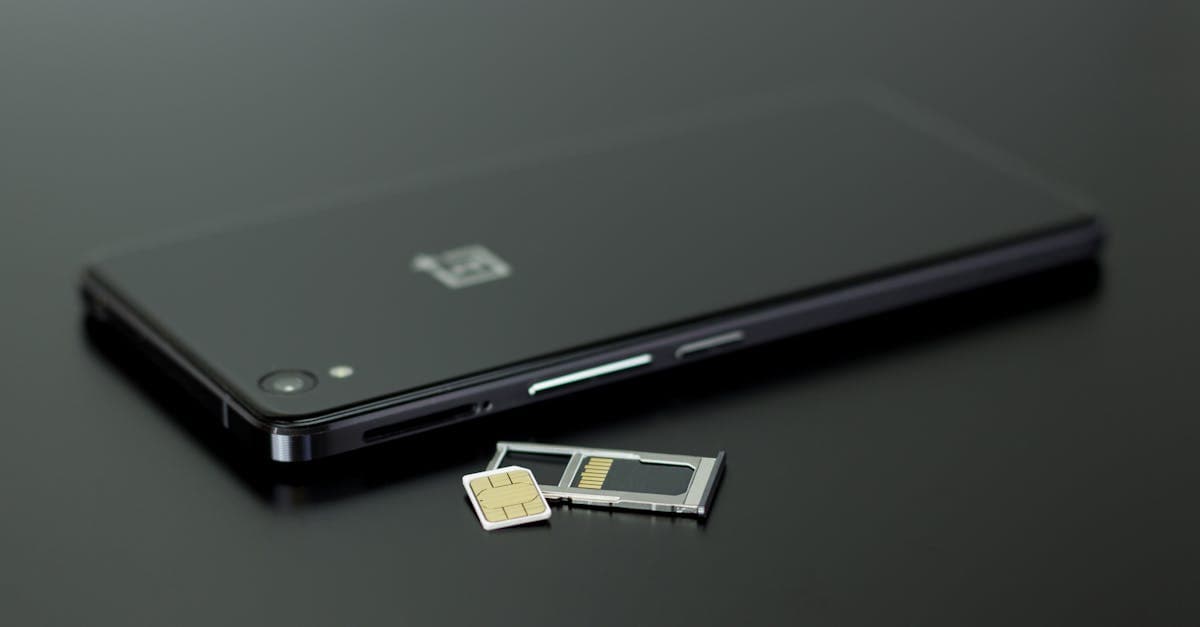
Tourists in Singapore can connect via physical SIM cards at Changi Airport, local operator eSIMs from Singtel, StarHub, or M1, international eSIMs purchased before departure, or Wireless@SG public Wi-Fi. Mobile data is not optional when you are unwell in an unfamiliar city. Calling your insurer's 24-hour emergency hotline, locating the nearest A&E, and keeping family informed all require a reliable connection.
Singapore's network infrastructure makes this straightforward. Opensignal's 2024 ranking places Singapore in the global top five for mobile network quality. Average 5G download speeds across Singtel, StarHub, and M1 range from 350 to 600 Mbps. Dead zones in tourist areas are effectively non-existent.
Physical SIM at Changi. Available at Terminals 1 through 4 immediately after immigration. A seven-day unlimited data SIM costs S$15 to S$30 depending on the operator. The right option for travellers without eSIM-capable handphones.
International eSIM before departure. Airalo covers Singapore from USD 4.50 (around S$6) for 1 GB over 30 days, the lowest-cost pre-departure entry point at the time of writing. Hello Roam offers regional ASEAN plans that include Singapore alongside neighbouring countries, a practical choice for multi-destination trips through Southeast Asia where one plan covers multiple borders without switching providers mid-trip.
Local operator eSIMs. Singtel's hi!Tourist eSIM starts at S$8 for 3 GB over three days, or S$15 for 10 GB over seven days. StarHub and M1 offer comparable pricing, all with 5G capability across their tiers.
Wireless@SG public Wi-Fi. Government-operated and available at MRT stations, hawker centres, and shopping malls. Speeds run 1 to 10 Mbps: functional for maps and messaging, not adequate as a data substitute. Changi Airport's free Wi-Fi runs considerably faster, around 20 to 50 Mbps, but neither replaces dedicated mobile data when you need guaranteed connectivity.
Activate an eSIM before you board. Arriving with data already running means you are not relying on airport Wi-Fi during immigration clearance, the moment when access to insurer contact details may matter most.
Singapore ranks in the top five globally for mobile network quality, per Opensignal's 2024 benchmarks. 5G average download speeds run 350 to 600 Mbps across Singtel, StarHub and M1. Dead zones in tourist areas are essentially non-existent.
That matters most in an emergency. Calling your insurer's 24-hour hotline, navigating to the nearest hospital on Google Maps, and keeping family informed all depend on reliable mobile data.
Physical SIMs are available at Changi from T1 through T4 arrivals, immediately after immigration, at SGD 15 to 30 for seven days of unlimited data. Singtel's hi!Tourist eSIM offers 3 GB for SGD 8 over three days or 10 GB for SGD 15 over seven days, with 5G capability. StarHub and M1 offer comparable options.
International eSIM plans purchased before departure include Airalo, starting from around USD 4.50 for 1 GB over 30 days. Hello Roam's regional ASEAN plans include Singapore within a multi-country package, suited to travellers combining Singapore with Bangkok, Kuala Lumpur or Bali, with coverage transparency and consistent support across the region.
Wireless@SG public Wi-Fi covers MRT stations, hawker centres and malls, running at 1 to 10 Mbps. Workable for maps and messaging. Voice calls to overseas insurer hotlines require a proper data connection.
Activate your eSIM before boarding. Arriving with data already running means insurer contact details and hospital locations are accessible the moment you clear immigration, precisely when access matters most.
Some insurers permit post-arrival purchase. FWD, Singlife, and a small number of others allow online applications after landing via their mobile apps or websites, though the list is shorter than most travellers expect.
The critical constraint is the waiting period. Any policy purchased after arrival carries a 24 to 48 hour delay before medical claims become valid, as touched on in the exclusions section above. Claims for incidents during that window are declined. Someone who lands feeling unwell and is admitted to hospital within the first day has no valid medical claim.
Post-arrival policies will not cover any illness or condition that existed before purchase, including symptoms already present on arrival. Insurers treat undisclosed symptoms at the point of sale as pre-existing.
Changi Airport's insurance counters in some terminals offer a walk-in alternative. Selection is limited and premiums run higher than equivalent digital rates.
The standard recommendation holds: purchase before departure, ideally when booking flights. This activates trip cancellation cover immediately and removes the medical claims waiting period entirely.
If you are already in Singapore without cover, buy online, record the exact time your waiting period expires, and seek medical attention immediately for anything urgent. Do not delay treatment waiting for cover to activate.

No, travel insurance is not a legal requirement to enter Singapore. Unlike the Schengen zone, Singapore's immigration process checks only your passport and travel documents. However, foreign visitors pay full unsubsidised rates at Singapore hospitals, making coverage strongly advisable.
Travel insurance for a seven-day Singapore trip costs between S$18 and S$42 for most standard plans. The price varies based on medical limit, evacuation cover type, and applicant age. Singlife Travel Plus starts at around S$18, while NTUC Income Enhanced PreX starts at around S$42.
Yes, dengue fever is covered as a standard illness under all major Singapore travel insurance policies reviewed for 2026. It is not treated as a tropical disease exclusion by most insurers. Always check the full exclusions schedule for terms like 'tropical,' 'vector-borne,' or 'endemic disease' before purchasing.
Standard travel insurance for Singapore covers medical and hospitalisation costs, emergency evacuation, trip cancellation and curtailment (typically S$5,000 to S$15,000), baggage loss and damage (S$3,000 to S$5,000), personal liability, and COVID-19 under standard medical benefit rules. Baggage delay benefits generally activate after six to twelve hours.
Foreign visitors pay unsubsidised rates at Singapore public hospitals. A&E visits start at S$120 to S$180, general ward stays cost S$250 to S$350 per night, and intensive care runs S$2,000 to S$5,000 per day. Singapore's national health insurance, MediShield Life, covers only citizens and permanent residents.
A minimum of S$500,000 in medical coverage is advisable for any visit to Singapore. If you prefer access to private hospitals, S$1,000,000 provides more comfortable headroom. A major surgical admission can quickly exhaust lower coverage limits given Singapore's unsubsidised foreigner hospital rates.
Common exclusions include capped emergency evacuation limits, undisclosed pre-existing conditions, private hospital billing at public tariff rates only, and adventure or water sports activities. Policies purchased after arrival in Singapore also carry a 24 to 48-hour waiting period before medical claims become valid.
Yes. Any condition not disclosed at the time of purchase, and not covered by a paid rider, renders all related claims void. Non-disclosure is not a grey area; insurers are entitled to reject the claim entirely. NTUC Income Enhanced PreX is one plan that accepts pre-existing conditions such as hypertension and type 2 diabetes under a specific rider.
The best travel insurance plans for Singapore in 2026 are FWD Premium, NTUC Income Enhanced PreX, AXA SmartTraveller Elite, Singlife Travel Plus, and MSIG TravelEasy. Each suits a different traveller profile: FWD Premium is best for digital claims, AXA for cashless hospital access, and MSIG TravelEasy for seniors up to age 85.
MSIG TravelEasy and NTUC Income Enhanced PreX are the recommended options for senior travellers. Both accept applicants up to age 85 and offer pre-existing condition riders for commonly managed health conditions. Premiums will be significantly above base rates due to age surcharges.
Yes, COVID-19 now falls under standard medical benefit rules for most major insurers in Singapore. No separate rider or additional documentation is required. Check your specific policy's medical benefit clause to confirm this applies.
Yes, but policies purchased after arrival carry a standard medical claims waiting period of 24 to 48 hours before coverage becomes valid. This means you are not protected immediately upon purchase. It is strongly advisable to purchase insurance before departing for Singapore.
Most plans include emergency medical evacuation, but coverage type varies. Some plans cap evacuation at a fixed limit, while mid-range and premium plans offer unlimited cover. Aircraft-based evacuation to Europe or North America can cost S$30,000 to S$200,000 or more, so unlimited evacuation cover is strongly preferable for long-haul travellers.
Some insurers reimburse only at public hospital tariff rates, even for treatment received at private facilities like Raffles Hospital or Mount Elizabeth. AXA SmartTraveller Elite offers cashless direct billing at Raffles Hospital. Always check the tariff schedule in the full policy document, not just the product brochure.
Singapore reports 30,000 to 80,000 dengue cases per year during peak cycles, with elevated transmission from April through October. Four dengue serotypes are present and no tourist vaccine is widely available. The National Environment Agency tracks active dengue clusters at the neighbourhood level at nea.gov.sg, updated weekly.
Yes. Without insurance documentation, public hospitals in Singapore require a cash deposit before commencing treatment, typically set at S$3,000 to S$10,000 depending on the likely duration of admission. This is formal hospital policy, not a guideline, and hospitals have pursued overseas patients for outstanding bills through collection processes.
Singlife Travel Plus and Etiqa Tune Protect are the recommended budget options, both coming in under S$30 for a seven-day trip and including unlimited evacuation cover. They are best suited to adults under 55 with no pre-existing conditions. The trade-off is a lower medical limit and a more basic claims interface.
FWD and AXA both offer annual multi-trip plans. To assess value, multiply your per-trip premium by three and compare it against the annual quote for your age and health profile. The break-even point is typically the third trip within a year.
HelloRoam: your trusted travel eSIM that keeps you online across borders.
Explore Plans