Portable WiFi Japan: Pocket WiFi Vs eSIM Vs Roaming for Singaporeans (2026 Guide)

Written by: James Harrington


11 min read
HelloRoam is a global eSIM provider offering instant mobile data in 170+ countries. Buy prepaid travel eSIM plans with no extra fees, no contracts, and instant activation on any eSIM-compatible device.
11 min read
Seven days in Japan on Singtel DataRoam Easy costs S$105, with speeds throttled to around 1Mbps after the first gigabyte each day. That's the baseline for any honest cost comparison.
The throttle threshold is what changes the experience, not the headline price. All three Singapore telcos cut speeds after 1GB per day. On a navigation-heavy day in Tokyo, most travellers hit that cap before early afternoon. At 1Mbps, messaging still functions; real-time maps and video calls become unreliable.
Pocket WiFi rentals shift the maths. A shared device runs from S$45 to S$70 for the full week, in yen terms roughly JPY 550 to JPY 800 per day depending on the provider. The yen's prolonged weakness against the Singapore dollar means those rates convert to noticeably lower SGD costs than two or three years ago.
eSIM plans trim costs further for individual travellers. The options in the table above sit far below any carrier day-pass for the week. None impose the same per-day throttle structure as Singapore roaming plans, and none require a physical device.
The saving scales with group size. A solo traveller switching from Singtel's day-pass to an eSIM saves between S$60 and S$90 over the trip. For a family of four, each on Singtel's rate, the cumulative saving by moving to eSIM or shared pocket WiFi lands between S$240 and S$420.
Subscribers on Circles.Life, GOMO, Redone, or Zero1 face a harder constraint. These MVNOs (Mobile Virtual Network Operators, carriers that lease infrastructure rather than build their own) offer no Japan roaming day-pass. For that segment, eSIM or pocket WiFi is the only option. There is no carrier day-pass to fall back on.

Group size determines the answer. Start there.
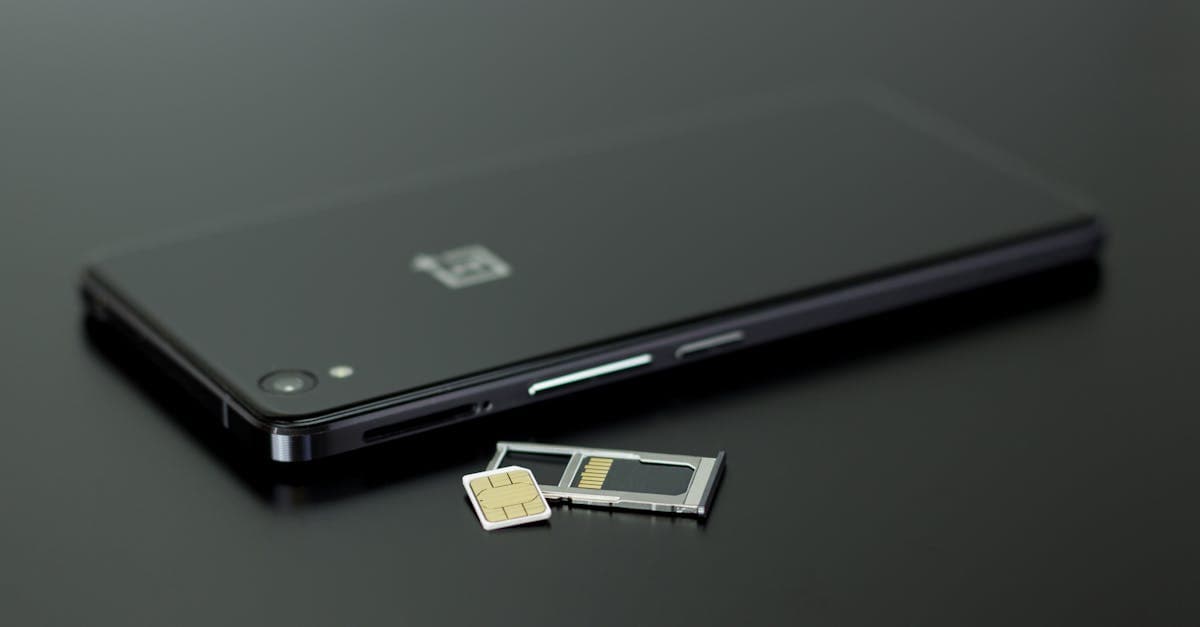
Solo travellers have a clear case for eSIM. No device to charge each night, no return queue at Narita, and no risk of misplacing a rental router worth several thousand yen in a packed Shinjuku station. Hello Roam's Japan plan and Airalo's 10GB option both support pre-flight setup at Changi, activating automatically on landing. For those who want to review their Japan eSIM options before departure,(https://www.helloroam.com/en-SG/local-esim) are available directly through the app. Setup takes a few minutes.
Couples land in the same position. Two individual eSIM plans at rates shown in the table above remain cheaper than one shared pocket WiFi rental for most week-long itineraries.
Families of four or more reach a different conclusion. One pocket WiFi device divided across four people brings the per-person daily cost to around S$2 to S$2.50. Put that against four individual eSIM purchases or four carrier day-passes, and the shared device wins on cost alone. Singtel's total for four people over seven nights exceeds S$400; a single pocket WiFi rental for that same group comes in well under the pocket WiFi range shown in the first table. The gap between the two represents meaningful money by any measure.
Business travellers managing laptops and tablets alongside their handphones are better placed with pocket WiFi. One router handles multiple simultaneous connections without per-device plan purchases across the team.
A compatibility check is essential before committing to eSIM. iPhone 14, iPhone 15 Pro, Samsung Galaxy S23, Samsung Galaxy S24, and the OPPO Reno 10 all support eSIM natively. Contract handphones on Singtel or StarHub may carry a SIM lock that blocks eSIM activation. Submit an unlock request to your carrier at least three working days before departure.
Five providers account for most portable WiFi Japan bookings from Singapore. Each targets a different segment, and the differences between them are worth understanding before you book.
Ninja WiFi is the default recommendation for most trips. Daily rates run from S$5 to S$7.50 on Docomo and SoftBank networks. Premium-tier bookings for Tokyo and Osaka now include 5G-capable devices, though for typical tourist use (navigation, messaging, and photos), 4G LTE on either network already delivers more than adequate performance. Coverage extends reliably into Kyoto, Nara, and Hokkaido's main towns.
CDJapan Pocket WiFi is the budget pick. Daily rates of S$4.50 to S$6.50 on SoftBank and Docomo make it the lowest-cost provider with consistent airport counter availability. Unlimited plans apply a speed reduction once daily usage crosses the plan's built-in threshold; data-heavy travellers should confirm the cap with the provider before booking.
Sakura Mobile WiFi runs exclusively on the Docomo network. At S$5 to S$7 per day, it sits mid-market and suits multi-city itineraries particularly well. Users planning Tokyo-to-Kyoto-to-Hokkaido routes report reliable signal throughout, which reflects Docomo's strong rural and inter-city penetration across Japan.
eConnect Japan suits families and business groups best. Unlimited Ultra plans support up to 10 simultaneous connections, making it the only device in this comparison that comfortably handles a group with tablets and laptops alongside handphones. Daily rates of S$5.50 to S$8.50 reflect both device capacity and data generosity.
IIJmio Travel SIM takes a structurally different approach. Rather than throttling speed after a daily threshold, IIJmio applies a hard data cap: when the allocation runs out, the connection stops. Entry price sits at the lowest daily rate of any device in this comparison, which suits data-light travellers who check maps and email but rarely stream video. For that segment, cost certainty matters more than data volume.
All five providers offer counter pickup at Narita (NRT), Haneda (HND), and Kansai International (KIX). Hotel delivery is available from most for an additional charge; confirm terms before booking. If your flight arrives before 6am or after midnight, check counter operating hours in advance rather than assuming standard business hours apply.
Cherry blossom season (late March to April) and the Chinese New Year travel window reliably cause device shortages across all major providers. Book four to six weeks ahead if your trip falls in either period. Waiting until the week before departure is a gamble that rarely pays off.
Yes, one device serves a group well. Pocket WiFi broadcasts a standard WiFi signal that any smartphone, tablet, or laptop can join simultaneously, exactly as a hotel router does.
Most rental devices support five to ten simultaneous connections. Confirm the exact limit with your provider when booking, since entry-level units sometimes cap at five. At the per-person cost established earlier in this guide, four people splitting one device spend considerably less than buying four individual plans for the same trip.
Battery life is the main practical constraint. Most rental units last eight to ten hours of continuous use, so carry a portable power bank for full sightseeing days where a power socket is not accessible until the evening.
Signal weakens with distance from the device. Within a group exploring the same temple or neighbourhood, this is not noticeable; the practical range covers any normal sightseeing scenario. When the group splits for separate activities, the person carrying the router takes the connection with them.
The arrangement breaks down when separations become frequent. If group members regularly spend half a day or more apart on the same trip, individual eSIM plans are more practical and remove the need to coordinate who holds the device.
A hybrid approach suits many families well. One pocket WiFi handles the children's tablets and any shared laptop, while each adult carries a separate eSIM such as Airalo as a personal data connection. The router stays in the kids' bag, leaving each parent independently connected.
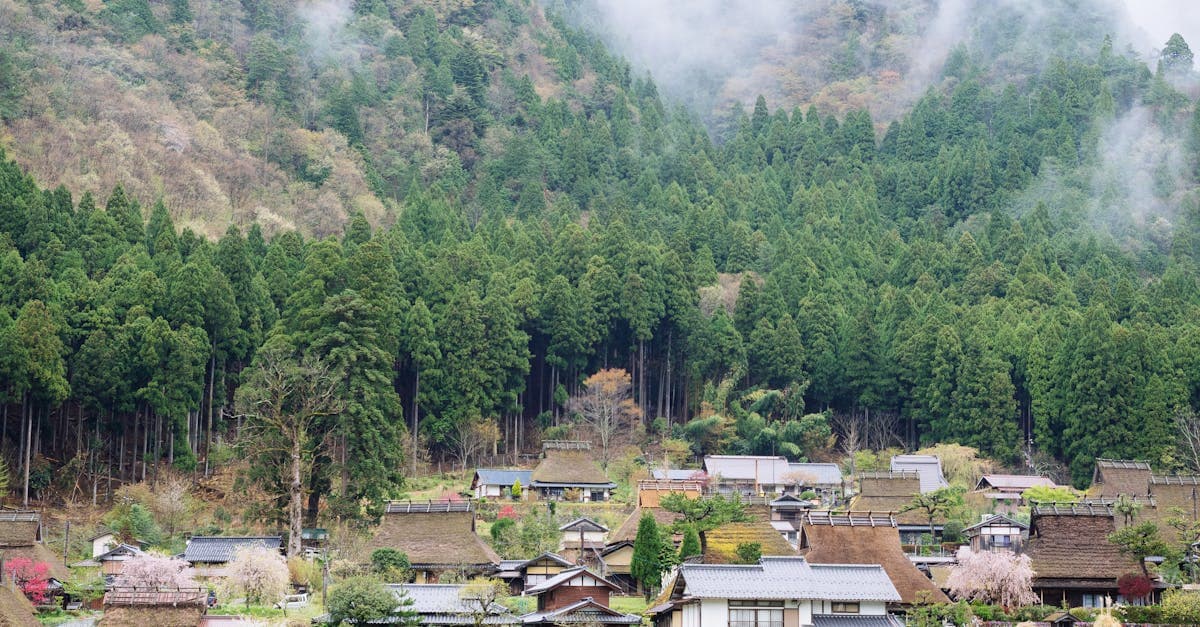
Pocket WiFi on Docomo or SoftBank covers all major stops on a standard Singapore itinerary, including Tokyo, Osaka, Kyoto, and Nara. Coverage thins above 1,500 metres and on remote island chains, but both networks handle the main tourist circuit reliably.
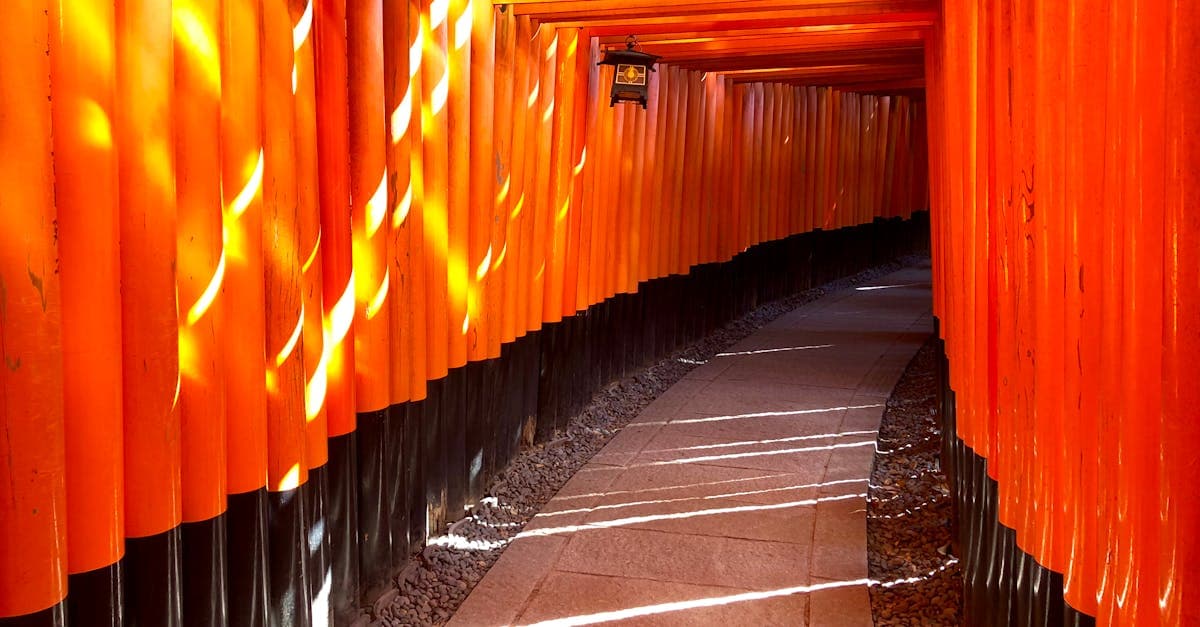
Most stops on a standard Singapore itinerary sit in Docomo's strongest zones. Tokyo's wards, including underground stations, run on Docomo tunnel repeaters. Osaka and Namba are equally strong. Kyoto city is well-served throughout, including at Arashiyama's bamboo grove, Fushimi Inari, and Gion. Nara deer park and Todai-ji both rate as very good.
Hakone is where things get nuanced. Towns and ryokan areas hold a reliable signal, but the ropeway and crater rim drop in and out. Download offline maps on Google Maps or Maps.me before leaving your hotel for the day.
Hokkaido splits cleanly. Sapporo and Niseko are excellent. Deep rural Hokkaido, including Daisetsuzan and Shiretoko, rates as moderate, and those heading into the national parks should treat connectivity as a bonus rather than a given. Okinawa's main island is well-covered; outer islands such as Ishigaki and Miyako are adequate on Docomo-backed devices.
On the Tokaido and Sanyo Shinkansen lines, coverage is near-continuous, with brief drops only inside the longest tunnels. In the Japan Alps and around Nikko, valley towns and trailheads hold signal reliably. Mountain trails above approximately 1,500 metres are a different story: most networks weaken considerably, and offline maps are the practical fix before you set off.
Yes. Pocket WiFi devices broadcast a standard WiFi signal, and rental units from most providers support between five and ten simultaneous connections. Confirm the exact device limit at the time of booking, as it varies by model.
The per-person economics work in your favour. At the group daily rate covered earlier, sharing one router across four travellers costs a fraction of four individual eSIM plans. The saving is sharpest on trips of five days or longer.
Battery life sits at eight to ten hours of continuous use on most devices. Sufficient for a structured day in Kyoto, but a full-day excursion to Nikko will test the limit. Pack a portable power bank; one will keep most pocket WiFi routers running through a full day of sightseeing without access to a charging point.
Distance from the device matters. Signal weakens the further you move from the router, and concrete walls in older buildings cut it further still. The practical consequence: when the group splits for separate activities, whoever holds the router takes the connection. Everyone else goes offline.
This is precisely when individual eSIMs make more sense than sharing. If the group regularly separates for more than a few hours, the logistics of co-ordinating who carries the router outweigh the cost saving.
For families, a hybrid works better. Hello Roam's Japan plan (Docomo network, covering all the main tourist regions) serves as a personal eSIM for each adult, while one shared pocket WiFi router handles the children's tablets and any laptops. No single device failure then cuts the whole group off. The router goes in the day bag; the eSIM sits invisibly in the handphone.

Free WiFi in Japan is not reliable enough to replace a dedicated data connection for navigation-dependent travel. Session caps, login barriers, and peak-hour congestion make public hotspots unsuitable as a primary connection across a full day of sightseeing.
Standing outside an unfamiliar station exit, trying to load Google Maps while a 60-minute session limit has just expired: that is the moment Japan's free WiFi network reveals its limits.
The infrastructure itself is extensive. 7-Eleven's 7SPOT network, FamilyMart, Lawson, Starbucks, McDonald's, JR station hotspots, airports, and most major tourist sites all offer no-cost connections. Urban Japan is broadly covered. The issue is not availability; it is usability under real travel conditions.
Session caps are the first obstacle. Most convenience store and station hotspots limit individual connections to 30 to 60 minutes. Reconnecting mid-navigation while standing on an unfamiliar street is disruptive in a way that compounds quickly across a full day.
Login friction makes it worse. Many public networks require OTP verification via a Japanese mobile number, which international visitors simply cannot provide. The network shows signal; the connection wall blocks access.
Speed consistency is the third concern. At Shinjuku station and Osaka's Dotonbori during morning and evening commute windows, shared hotspot loads spike and performance drops. Navigation stalls; anything requiring sustained bandwidth becomes impractical.
Where free WiFi genuinely earns its place is at the hotel. Japanese hotel internet is near-universal and fast, making it well-suited for evening work, streaming, and downloading offline maps before the day ahead. That is the appropriate scope for it.
Treat free WiFi as a fallback, not a foundation. Any Singaporean itinerary that moves between cities and relies on real-time navigation requires a personal data connection.

Singtel DataRoam Easy costs S$105 for 7 days, StarHub Roam Easy costs S$84 to S$105, and M1 Roam Xtra costs S$70 to S$105. All three Singapore telcos throttle speeds after 1GB of data per day, dropping to around 512Kbps to 1Mbps for the remainder of the day.
eSIM plans offer the lowest cost for individual travellers. Hello Roam's Japan eSIM (5GB) costs S$16 to S$18 for the week, and Airalo's 10GB option costs S$18 to S$25. Both are significantly cheaper than any Singapore carrier day-pass, saving a solo traveller between S$60 and S$90 over a 7-day trip.
No. These MVNOs do not offer a Japan roaming day-pass. Subscribers on these networks must use an eSIM or rent a pocket WiFi device as their only options for mobile internet in Japan.
It depends on group size. Solo travellers and couples are better off with individual eSIM plans due to lower cost and no device to manage. Families of four or more and business groups with multiple devices benefit more from a shared pocket WiFi device, which brings per-person daily costs down to around S$2 to S$2.50.
Yes. Pocket WiFi devices broadcast a standard WiFi signal and most rental units support five to ten simultaneous connections. Sharing one device across four travellers is significantly cheaper than buying four individual plans, though whoever carries the router takes the connection when the group splits up.
Most rental pocket WiFi units last eight to ten hours of continuous use. For full-day sightseeing trips without access to a power socket, carrying a portable power bank is recommended to keep the device running throughout the day.
Ninja WiFi is the most broadly recommended option, with daily rates of S$5 to S$7.50 on Docomo and SoftBank networks and 5G-capable devices for Tokyo and Osaka. CDJapan Pocket WiFi is the budget pick at S$4.50 to S$6.50 per day, while eConnect Japan suits families and business groups needing up to 10 simultaneous connections.
Most pocket WiFi providers operate on Docomo and SoftBank networks. Sakura Mobile WiFi runs exclusively on Docomo, which offers strong rural and inter-city penetration across Japan. Docomo-backed devices tend to perform better in areas outside major cities.
Daily rates range from S$4.50 to S$8.50 depending on the provider and plan tier. CDJapan Pocket WiFi starts at S$4.50 per day, while eConnect Japan's Unlimited Ultra plans for groups reach S$8.50. A full week's rental for a shared device runs between S$45 and S$70 total.
Pocket WiFi on Docomo or SoftBank covers all major tourist stops including Tokyo, Osaka, Kyoto, Nara, and Hakone towns. Coverage weakens above 1,500 metres and on remote islands. For Hakone's ropeway and crater rim, downloading offline maps before departure is recommended as signal drops in and out.
Yes. Coverage on the Tokaido and Sanyo Shinkansen lines is near-continuous, with brief signal drops only inside the longest tunnels. The Docomo and SoftBank networks both provide reliable connectivity for most of the journey between major cities.
Yes. Contract handphones on Singtel or StarHub may carry a SIM lock that blocks eSIM activation. You should submit an unlock request to your carrier at least three working days before departure. Compatible devices include iPhone 14, iPhone 15 Pro, Samsung Galaxy S23, Samsung Galaxy S24, and the OPPO Reno 10.
All major providers offer counter pickup at Narita (NRT), Haneda (HND), and Kansai International (KIX) airports. Hotel delivery is available from most providers for an additional charge. If your flight arrives before 6am or after midnight, check counter operating hours in advance as they may not be open.
Book four to six weeks in advance if your trip falls during cherry blossom season (late March to April) or the Chinese New Year travel window, as both periods cause device shortages across all major providers. Waiting until the week before departure during these peak periods risks unavailability.
A family of four on Singtel's DataRoam Easy would spend over S$400 for a 7-day trip. Switching to eSIM plans or a shared pocket WiFi device can save the group between S$240 and S$420 over the same trip, depending on the option chosen.
No. Free WiFi in Japan is not reliable enough to replace a dedicated data connection for navigation-dependent travel. Session caps, login barriers, and peak-hour congestion make it unsuitable as a primary connectivity solution during a trip.
Pocket WiFi is the recommended option for business travellers managing laptops and tablets alongside their phone. A single router handles multiple simultaneous connections without requiring separate plan purchases for each device, making it more practical and cost-effective than individual eSIM plans per device.
Yes. Both Hello Roam's Japan plan and Airalo's 10GB option support pre-flight setup at Changi Airport, with the eSIM activating automatically upon landing in Japan. Setup takes a few minutes and eliminates the need to queue at airport counters on arrival.
HelloRoam: your trusted travel eSIM that keeps you online across borders.
Explore Plans