Best Time to Visit Japan From Singapore: 2026 Season and Cost Guide

Written by: David Chen


11 min read
HelloRoam is a global eSIM provider offering instant mobile data in 170+ countries. Buy prepaid travel eSIM plans with no extra fees, no contracts, and instant activation on any eSIM-compatible device.
11 min read
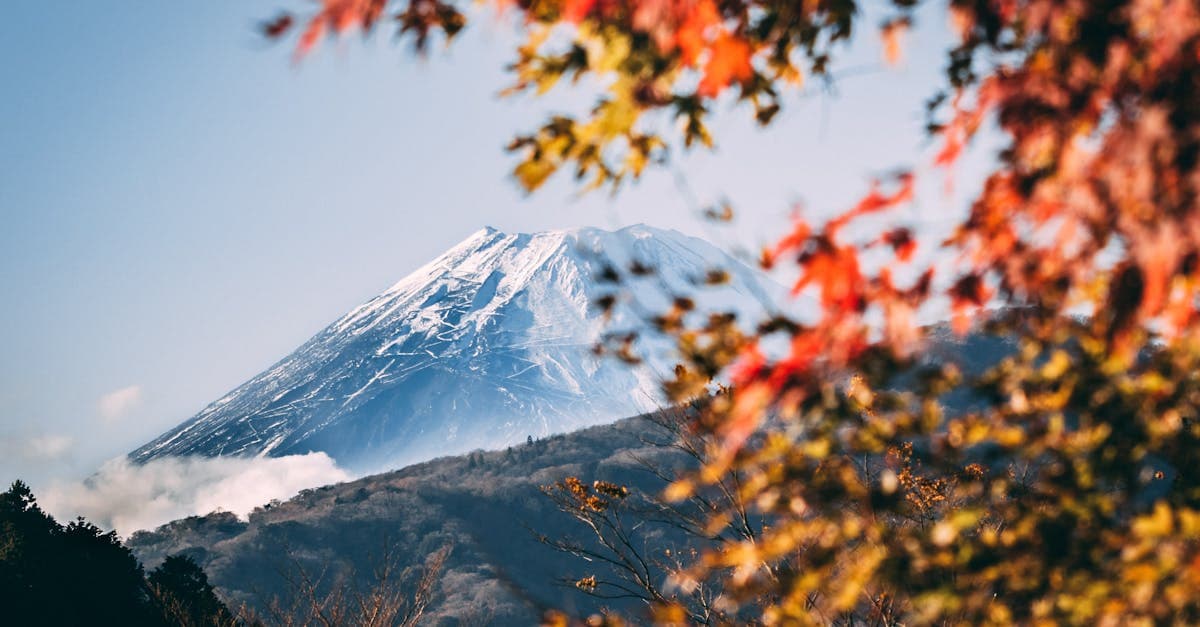
Japan's four seasons are genuine extremes for Singapore travellers: spring brings Tokyo to 12 to 23 degrees Celsius, summer to 25 to 36 degrees with matching humidity, autumn to 15 to 25 degrees with vivid foliage, and winter to 3 to 10 degrees. Singapore sits at 1.3 degrees north of the equator, and the contrast registers before you've cleared immigration at Narita.
Spring (March to May) brings Tokyo to 12 to 23 degrees Celsius, cool in the mornings and pleasant by midday. Most Singaporeans find it the most comfortable temperature range they've experienced outside an air-conditioned shopping centre. It is also Japan's busiest travel season.
Summer (June to August) pushes Tokyo to 25 to 36 degrees Celsius with humidity that matches or exceeds Singapore's. Typhoon risk builds from August onwards. Japan's summer festivals are spectacular, but arriving expecting cool relief from tropical heat is a mistake many first-timers make.
Autumn (September to November), at 15 to 25 degrees in Tokyo, is the consensus favourite among well-travelled Singaporeans. Foliage peaks from mid-October through November. A late September visit, arriving before the koyo crowds build, can be quietly excellent.
Winter (December to February) sits at 3 to 10 degrees Celsius in Tokyo, colder in Hokkaido and the Japanese Alps. Standard winter layers handle the main cities. For Singaporeans who have rarely experienced sub-10-degree weather, the novelty holds genuine appeal.
Japan recorded 36.9 million foreign visitor arrivals in 2024, up from 31.9 million before the pandemic, and is on course for 38 to 40 million in 2026. New crowd management measures are now in place at several flagship sites: permanent barriers at Mt Fuji, entry surcharges at parts of Kyoto, and photography restrictions in Gion district. The two windows carrying both the heaviest crowds and the highest prices are late March to early April for cherry blossoms and mid to late November for autumn foliage. Flights and hotels for either period need to be secured well in advance.
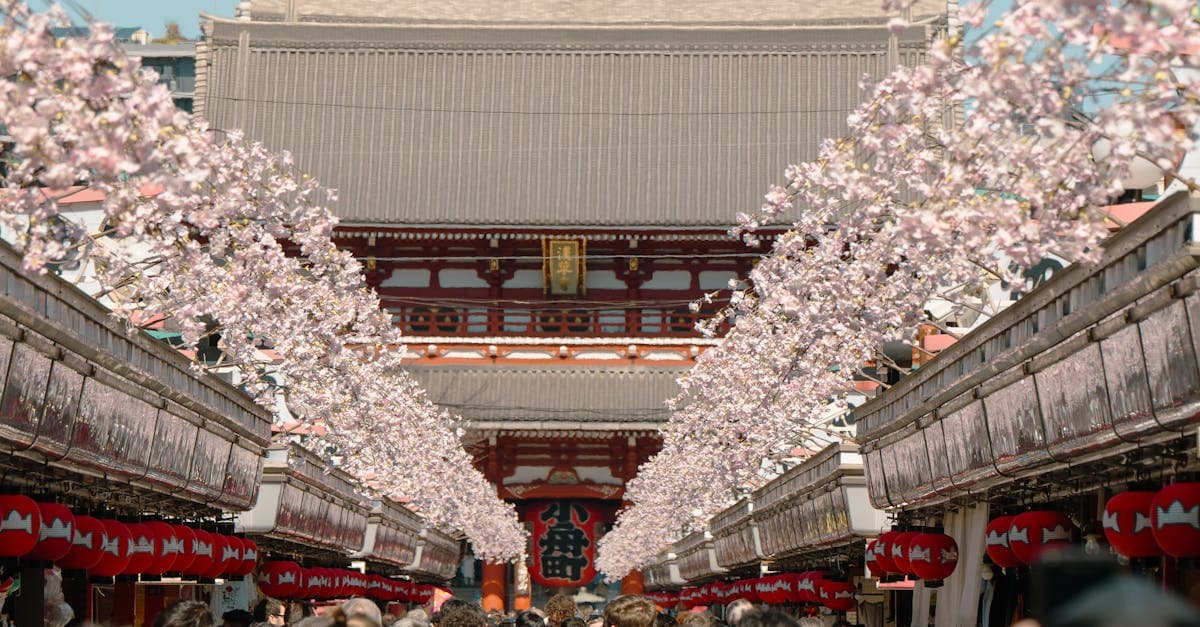
Full bloom in Tokyo falls around 28 to 30 March 2026, with the best viewing window running through 10 April. Osaka follows on 30 March to 1 April. Kyoto does not peak until 1 to 3 April, and Sapporo in Hokkaido holds back to 30 April through 3 May, the last stop on the national bloom calendar.
Tokyo's peak has shifted roughly five to seven days earlier since the 1990s as temperatures have risen. The Japan Meteorological Corporation publishes updated forecasts each season; final confirmation typically arrives in late March, which means most travellers have already committed to bookings before the official word comes through.
Return economy fares from Changi during cherry blossom peak range from S$900 to S$1,600. Hotels for late March and early April need to be locked in three to six months ahead; popular ryokan in Kyoto and Nara fill even faster.
Ground-level conditions have changed materially. Kyoto introduced entry surcharges at certain sites in 2025 and those restrictions remain in place for 2026. Photography is now banned in parts of Gion district. The barriers at Mt Fuji are permanent. Queue times at Fushimi Inari and the Philosopher's Path regularly exceed 90 minutes during peak bloom, so factor that into any itinerary that values moving efficiently.
The honest calculation: cherry blossom lasts seven to ten days at any given location. A single week of rain can collapse the season or strip petals before full bloom. You are, in effect, booking a premium-priced trip around a weather-dependent event with a narrow window and no refund. The risk is real, and worth naming.
For travellers with any flexibility, late April in Sapporo is the alternative that rarely makes headlines. Full cherry blossoms, significantly lighter crowds, lower flight costs, and no overlap with Golden Week congestion affecting Honshu. It is not widely promoted, which is precisely why it works.
Autumn foliage (koyo) in mid to late November offers comparable visual drama with more predictable timing. Return flights for that period run S$700 to S$1,000, and many experienced Japan travellers, having done both seasons, rate koyo the better value.
SGD 1 buys approximately 110 to 115 yen in the current period, making Japan effectively 20 to 25 per cent cheaper than it was before 2022. That rate advantage is the single most underreported fact in Japan travel planning for Singapore readers, and it applies across accommodation, food, transport, and entrance fees.
Flights from Changi are the largest variable cost, and the seasonal spread is wide:
Airlines serving Changi to Tokyo and Osaka include Scoot, Jetstar, Singapore Airlines, Japan Airlines, ANA, and Peach Aviation. Budget carriers dominate the January and September windows; full-service options remain competitive during peak demand when budget seat availability tightens early.
Off-peak daily spending runs S$120 to S$160 per person, covering mid-range accommodation, three meals, and transport. Cherry blossom and foliage peaks push that figure to S$200 to S$280, driven by hotel premiums and surcharges at congested sites. Golden Week is the sharpest spike of the calendar: accommodation triples and Shinkansen seats sell out within minutes of the one-month booking window opening on the JR website.
For off-peak travel, four to six weeks' lead time is generally sufficient. Cherry blossom season and Golden Week require three months minimum, without exception.
Data connectivity is an underappreciated line item. Carrier roaming on Singtel or StarHub adds S$84 to S$105 for a seven-day trip. Hello Roam's Japan(https://www.helloroam.com/en-SG/regional-esim) costs around S$28 to S$38 for 10 GB over 30 days, running on the Docomo network with coverage extending well beyond the Tokyo to Kyoto corridor.
The window worth watching is 7 to 20 May. Prices normalise sharply after Golden Week, conditions stay pleasant, and late cherry blossoms continue across Tohoku and Hokkaido. Singapore's March school holidays align directly with cherry blossom peak, the most expensive possible combination; the June holidays land squarely in Japan's rainy season (tsuyu) and the onset of summer heat.
Public WiFi alone does not support a comfortable Japan trip beyond a one-day city visit. Japan's public WiFi coverage is extensive: Seven-Eleven, FamilyMart, Lawson, most JR stations, Starbucks, and major tourist sites in Tokyo, Osaka, and Kyoto all carry free signals, giving a network footprint that covers the bulk of a standard tourist itinerary.
The practical limitations matter more than the coverage map implies. Sessions cap at 15 to 30 minutes before requiring reconnection, which becomes disruptive mid-navigation or when waiting on a delayed platform. Speeds run from 2 to 15 Mbps, adequate for a quick search but unreliable for downloading map tiles or syncing apps under time pressure.
Coverage also drops sharply outside the main tourist corridor. Rural trains, local buses, and roads connecting smaller towns carry no public WiFi network, meaning navigation and translation depend entirely on a personal data connection. Smaller temples and residential neighbourhoods within the cities are rarely covered either.
Three apps define the practical quality of a Japan trip, and all three require consistent mobile data. Google Maps for real-time transit guidance and live JR delay information. Google Translate's camera mode reads printed Japanese instantly, essential for menus, vending machine interfaces, and ticketing machines with no English option. PayPay, Japan's dominant QR payment platform, now accepts foreign-issued cards and is growing as the default payment method at smaller shops and market stalls moving away from cash.
An eSIM activates before you board at Changi, so you land at Narita or Kansai with data already running: no airport kiosk queue, no SIM counter, no physical card to manage.
Seven days of carrier roaming in Japan costs considerably more than most Singaporeans account for when building a trip budget. Singtel's Travel Pass for Japan runs to approximately S$105 over that window. StarHub's DataRoam option comes in at roughly S$84 to S$105, depending on the plan tier chosen.
Against that baseline, the eSIM market is substantially cheaper. The table below compares five options commonly purchased by Singapore travellers, each priced in SGD.
Prices are indicative at time of writing. Verify with each provider before purchase.
Choosing an eSIM over carrier roaming saves S$50 to S$70 on a standard seven-day Japan trip. That sum covers two nights at a budget guesthouse or a shinkansen leg between cities.
Hello Roam's Japan plans are priced in SGD, which removes currency conversion at checkout, and are backed by a Singapore-based support team reachable during SGT business hours. Plans access both Docomo and Softbank networks, which matters when choosing coverage suited to your itinerary.
Network selection depends on where you are going. Docomo-backed plans carry noticeably stronger coverage across Hokkaido, Tohoku, and the Japanese Alps, where Softbank signal thins on rural rail lines and at altitude. For trips confined to Tokyo, Osaka, and Kyoto, Softbank performs well across all three cities.
Pocket WiFi rentals remain available at Changi and on arrival at Narita, but make diminishing sense for solo travellers or couples. The daily cost is comparable to a personal eSIM, with the added inconvenience of a shared device that must be charged and returned on departure.
Between 20 and 30 million domestic trips occur during Golden Week. That single figure explains why the 29 April to 6 May block is Japan's most congested travel period, and why accommodation prices in Tokyo and Osaka roughly triple compared to the weeks before and after.
Golden Week 2026 runs eight consecutive days, combining four national holidays into a block that empties urban centres into resorts and popular destinations. Shinkansen reservations open exactly one month before departure, and as the earlier costs section covered, popular trains sell out within minutes of that window opening. Pre-booking all accommodation is not prudent planning: it is the minimum required.
The picture is not uniformly negative. Rural onsen towns, lesser-known national parks, and regional cities away from the main tourist circuit see a different dynamic during this period. Urban Japanese escape to them in numbers, but not the concentrated volume that overwhelms Tokyo and Osaka's major attractions. Arriving at well-known sites before 9am makes a real difference even at peak season.
For those who must travel during this window, three steps are non-negotiable. Set a calendar alert for the exact date the Shinkansen reservation window opens, one month ahead of your departure date. Pre-book all accommodation and restaurant reservations, expecting limited availability at popular addresses. Build a schedule weighted towards early mornings and less-visited neighbourhoods.
The fortnight immediately after Golden Week has a strong case. Late cherry blossoms continue across Tohoku into mid-May. Crowds dissipate quickly once the holiday block ends, accommodation returns to standard rates, and the general rhythm of Japan resumes. For a Singapore traveller weighing the two windows, the post-Golden Week period delivers comparable conditions at lower cost and considerably less advance planning required.
Fares from Changi hit their lowest twice a year. January to February and September are the standout windows, running roughly 40 to 60 percent below cherry blossom peak pricing. For a return trip of comparable duration, that saving covers a Shinkansen pass or two nights of decent accommodation.
January and February deliver more than cheap flights. Tokyo's temples and streets are at their quietest all year, Hokkaido ski resorts are at full peak, and onsens are most enjoyable precisely because the outside air is genuinely cold. Tokyo averages 3 to 8 degrees Celsius in January, which sounds alarming by Singapore standards. In practice, a standard winter jacket with a base layer and mid-layer handles it. This is not Northern Europe in mid-winter; it is cold, bright, and extremely manageable.
September is the second-cheapest window, but the risk is real. Typhoon season peaks across August and September, and a single storm can ground flights or disrupt outdoor itineraries with almost no notice. Travellers who go in September should build flexibility into plans rather than locking in non-refundable accommodation throughout.
The school calendar creates two specific traps. Singapore's March break lands squarely in cherry blossom season, the most expensive Japan combination possible from Changi. June holidays coincide with Japan's rainy season and climbing summer heat, adding cost while delivering less comfort than spring or autumn.
Budget: ★★★★★ = cheapest fares from Changi. Weather comfort: ★★★★★ = most comfortable for Singapore travellers. Crowd levels: relative to Japan's annual average.

Autumn (September to November) is the consensus favourite among well-travelled Singaporeans, with Tokyo temperatures of 15 to 25 degrees Celsius and vivid foliage peaking from mid-October through November. Return flights during the foliage peak run S$700 to S$1,000, and many experienced Japan travellers rate autumn the better value compared to cherry blossom season.
In 2026, Tokyo's cherry blossoms reach full bloom around 28 to 30 March, with the best viewing window running through 10 April. Osaka follows on 30 March to 1 April, Kyoto peaks on 1 to 3 April, and Sapporo blooms last from 30 April through 3 May.
Return economy fares from Changi vary widely by season. The cheapest window is January to February at S$400 to S$650, while cherry blossom peak (late March to early April) runs S$900 to S$1,600. July to August costs S$700 to S$1,100, and Golden Week (29 April to 6 May) ranges from S$850 to S$1,400.
Off-peak daily spending runs S$120 to S$160 per person, covering mid-range accommodation, three meals, and transport. Cherry blossom and foliage peaks push that to S$200 to S$280, driven by hotel premiums and surcharges at congested sites. Golden Week is the sharpest spike, with accommodation costs roughly tripling.
Yes. SGD 1 buys approximately 110 to 115 yen in the current period, making Japan effectively 20 to 25 per cent cheaper than it was before 2022. This rate advantage applies across accommodation, food, transport, and entrance fees.
Flights and hotels for cherry blossom peak need to be secured three to six months ahead. Popular ryokan in Kyoto and Nara fill even faster. The Japan Meteorological Corporation typically publishes final bloom confirmations in late March, by which point most travellers have already committed to bookings.
An eSIM is strongly recommended for a comfortable trip beyond a one-day city visit. While public WiFi is available at convenience stores, JR stations, and major tourist sites, sessions cap at 15 to 30 minutes and coverage drops sharply outside the main tourist corridor, making a personal data connection essential for navigation, translation, and payment apps.
Seven days of carrier roaming costs S$105 with Singtel's Travel Pass for Japan, and S$84 to S$105 with StarHub's DataRoam option. By comparison, eSIM plans for Japan typically cost S$28 to S$42, saving S$50 to S$70 on a standard seven-day trip.
Hello Roam offers 10 GB over 30 days for approximately S$28 to S$38, running on the Docomo and Softbank networks. Nomad and Airalo offer similar 10 GB plans at S$30 to S$40, while Holafly and Klook offer unlimited data for 7 days at S$32 to S$42.
Docomo-backed plans carry noticeably stronger coverage across Hokkaido, Tohoku, and the Japanese Alps, where Softbank signal thins on rural rail lines and at altitude. For trips confined to Tokyo, Osaka, and Kyoto, Softbank performs well across all three cities.
Three apps define the practical quality of a Japan trip and all require consistent mobile data. Google Maps provides real-time transit guidance and live JR delay information. Google Translate's camera mode reads printed Japanese instantly for menus and ticket machines. PayPay, Japan's dominant QR payment platform, now accepts foreign-issued cards and is increasingly the default at smaller shops.
Golden Week 2026 runs from 29 April to 6 May and is Japan's most congested travel period, with between 20 and 30 million domestic trips occurring across the block. Accommodation in Tokyo and Osaka roughly triples in price, and Shinkansen reservations sell out within minutes of the one-month booking window opening. Travellers with flexibility are better served by the fortnight immediately after Golden Week.
January to February is the cheapest window of the year, with return economy fares from Changi at S$400 to S$650. Early September is also competitively priced at S$400 to S$600, though typhoon risk builds from mid-month. Both periods also carry the lowest crowd levels and hotel rates.
Several flagship sites have introduced permanent crowd management measures. Mt Fuji now has permanent barriers in place, parts of Kyoto introduced entry surcharges in 2025 that remain for 2026, and photography is banned in parts of Gion district. Queue times at Fushimi Inari and the Philosopher's Path regularly exceed 90 minutes during peak bloom periods.
Tokyo temperatures in winter range from 3 to 10 degrees Celsius, with colder conditions in Hokkaido and the Japanese Alps. Standard winter layers handle the main cities, and winter is the lowest-cost travel season. For Singaporeans who have rarely experienced sub-10-degree weather, the cold novelty holds genuine appeal, and onsen visits are a particular highlight.
Summer (June to August) pushes Tokyo to 25 to 36 degrees Celsius with humidity that matches or exceeds Singapore's, meaning it offers little climatic relief for Singapore travellers. Typhoon risk builds from August onwards. Japan's summer festivals are spectacular, but first-timers expecting cool temperatures are often caught off-guard.
Late April in Sapporo offers full cherry blossoms with significantly lighter crowds, lower flight costs, and no overlap with Golden Week congestion affecting Honshu. Autumn foliage (koyo) in mid to late November is another strong alternative, offering comparable visual drama with more predictable timing and return flights at S$700 to S$1,000.
The window of 7 to 20 May is particularly good value: prices normalise sharply after Golden Week, conditions stay pleasant, and late cherry blossoms continue across Tohoku and Hokkaido. January to February is also excellent value, with the cheapest flights of the year and the lowest hotel rates, though temperatures in Tokyo drop to 3 to 10 degrees Celsius.
HelloRoam: your trusted travel eSIM that keeps you online across borders.
Explore Plans