Best Time to Visit Bali From New Zealand: a 2026 Guide for Kiwi Travellers

Written by: David Chen


11 min read

HelloRoam is a global eSIM provider offering instant mobile data in 170+ countries. Buy prepaid travel eSIM plans with no extra fees, no contracts, and instant activation on any eSIM-compatible device.
11 min read

Two seasons shape a Bali trip. Dry runs from May to October, wet covers November through April, and the difference between them is more about rain timing than temperature.
Temperatures barely move between seasons. Daytime highs sit between 29 and 31 degrees Celsius all year, with nights cooling to 22 to 24 degrees. The ocean holds steady at 27 to 29 degrees regardless of month, so swimming is genuinely never off the table.
Ubud is the exception. Sitting several hundred metres above the coast, it runs 2 to 4 degrees cooler than Kuta or Seminyak, which matters when your itinerary mixes beach days with highland temples and rice terrace walks. A light layer for evenings up there is worth the space in your bag.
What shifts most dramatically between seasons? Prices and crowds, more than you'd expect. A return flight from Auckland in July can cost double what the same route runs in January or February, and popular resort areas go from packed to near-empty between seasons.
Mornings in the wet season are often clear. Rain arrives mid-afternoon, leaving the rice terraces at their greenest and the west coast surf at its most consistent.
Dry season suits anyone wanting reliable beach days and better east coast break conditions. Wet season suits travellers chasing lower prices, fewer crowds, and landscapes at peak green. Neither is a write-off; they're just different trips.
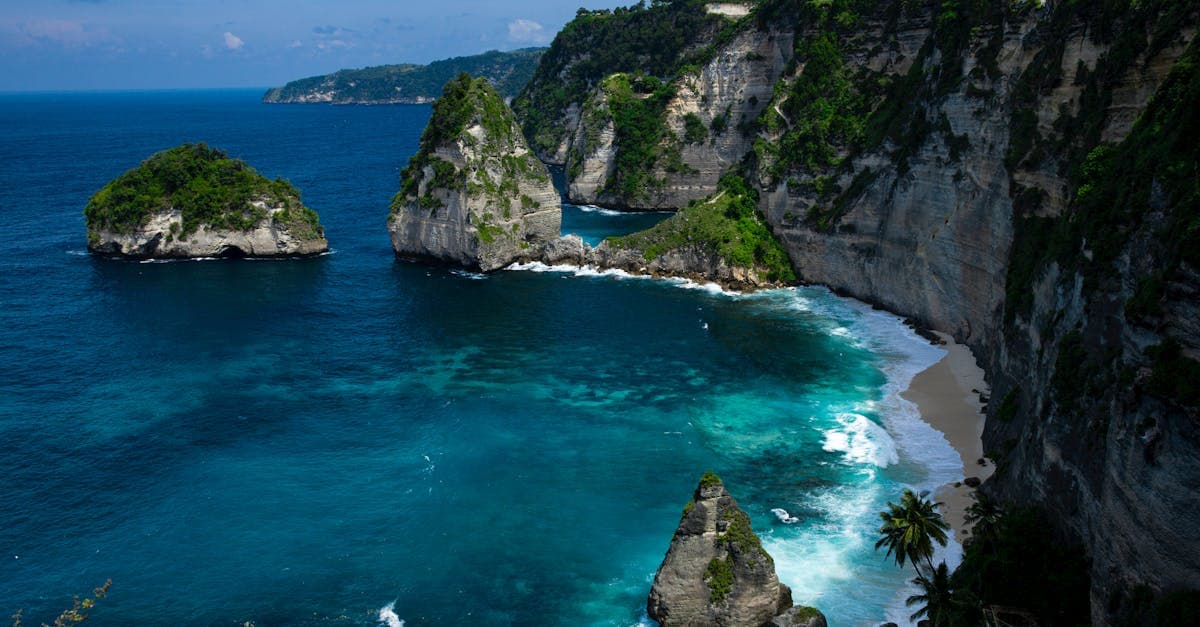
January is Bali's wettest month, with 300 to 350mm of rain and thin crowds. Mornings usually clear; afternoons are reliably wet. Return flights from Auckland run around NZ$600 to $900, the cheapest of the year.
February brings similar rainfall (280 to 320mm) but draws surfers to the west coast, where swells are at their best. Accommodation prices are at their lowest. Solo travellers and couples get the most from this month.
March is transitional, with rain easing through the month. The key planning note for 2026: Nyepi falls on 19 March and Denpasar Airport closes for 24 hours. The Ogoh-ogoh parade the evening before is a bucket-list event in its own right. Easter bookings for late March and April start filling from this point.
April sees rain easing considerably. Easter and NZ school holidays push demand and prices into the mid-range. Galungan sometimes falls in April (it follows the Pawukon cycle), adding cultural interest if the dates align.
May is the insider value window. First full dry-season month, with return flights from Auckland around NZ$750 to $1,100 and noticeably quieter conditions than July or August. The best month of the year for Kiwis who can travel outside school terms.
June is reliably dry, with the Bali Arts Festival running in Denpasar across several weeks. Prices are climbing but accommodation is still available with a couple of months' notice.
July is the peak: NZ mid-year school holidays, dry-season weather, and flights running NZ$1,200 to $1,900 return from Auckland. Book four to six months ahead or accept limited choices.
August is the driest month on record, with just 25 to 35mm of rain. Beaches are at their most crowded. The Bali Kite Festival runs at Padanggalak Beach in Sanur. Peak pricing continues throughout.
September runs 30 to 40 percent cheaper than July for return flights while keeping dry-season reliability. Crowds ease and availability opens up. A strong month for Kiwis who can shift a week around school term dates.
October aligns with NZ spring school holidays, offers late dry-season reliability, and the Kuta Karnival gives the month some event interest. Prices are more reasonable than July.
November opens wet season, though mornings stay clear for much of the month. Prices drop noticeably and crowds thin fast.
December brings NZ's Christmas and summer break squarely into Bali's wet season. Afternoon rain is regular. Holiday premium pricing applies regardless of the conditions.
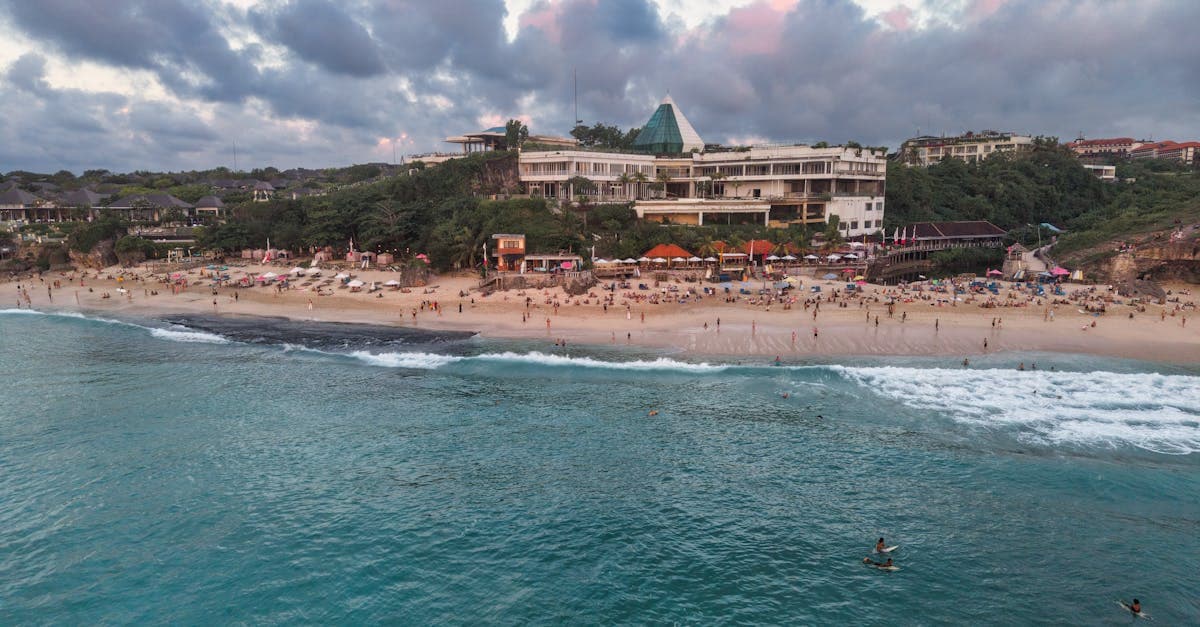
NZ school terms drive Bali booking patterns from this market more than almost any other factor. Four holiday windows fall each year, and each lands in a different Bali context.
July is the obvious pick for families, and the most expensive. Dry season, reliable beach days, and west coast surf in good form. Flights from Auckland run at the top of their annual range, resorts fill well in advance, and the most popular villas disappear first. Four to six months of lead time is the minimum.
October is the smarter pick for many Kiwi families. Late dry season delivers weather near-equivalent to July at meaningfully lower prices. The Kuta Karnival adds a specific reason to choose this window over the one before. Two to three months' notice is usually enough.
April and Easter suit budget-focused travellers willing to accept some afternoon rain. Galungan occasionally overlaps with this window depending on the Pawukon calendar, worth confirming if cultural experiences are a priority.
December and January combine NZ's longest school break with Bali's wet season. Afternoons are reliably rainy and prices carry a Christmas premium the conditions don't justify. Morning-first itineraries (temple visits, cooking classes, walks before noon) make the best of this timing.
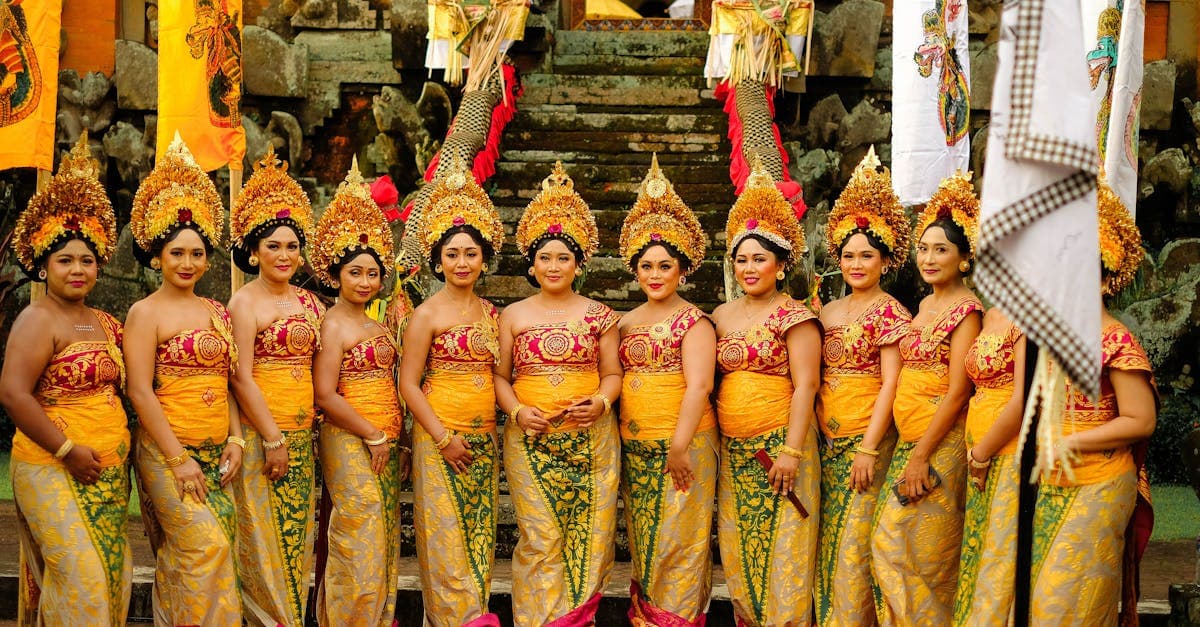
Bali's Hindu festivals don't follow the Gregorian calendar. Most major celebrations use the Pawukon cycle, a traditional Balinese system that operates independently of the standard year, so dates shift annually and are worth confirming before you finalise anything.
Galungan and Kuningan are the most visually striking events on the calendar. During Galungan, penjor poles (decorated bamboo arches strung with offerings and greenery) line every road on the island, and village ceremonies run for days. Kuningan follows ten days later, marking the close of the celebration. Timing a trip to overlap brings a ceremonial atmosphere that Bali rarely shows otherwise.
Bali Arts Festival runs from June into July in Denpasar, covering dance, gamelan and craft exhibitions across several weeks. For travellers who typically skip Denpasar entirely, this is a solid reason to stop.
Bali Kite Festival takes place at Padanggalak Beach in Sanur through July and August. Teams fly enormous handmade kites in size and design categories, drawing significant local participation. Worth an afternoon if you're in south Bali at the right time.
Ubud Writers and Readers Festival runs in October with an internationally regarded author lineup. For Kiwi travellers wanting more than beach time, it's the strongest single reason to target October specifically. Accommodation around Ubud fills quickly once the programme is announced.

19 March 2026 is not a good day to have a Bali flight scheduled. Denpasar Airport closes for a full 24 hours on Nyepi, the Balinese Hindu New Year and Day of Silence, and airlines don't simply delay affected services. They cancel or reschedule them, often with several weeks' notice.
The evening before, on 18 March, is worth being on the island for. The Ogoh-ogoh parade moves through village streets: handcrafted demon effigies, some standing several metres tall, carried through crowds and burned at dusk. It's one of the most visually striking events in the Balinese calendar, and unlike anything you'll encounter elsewhere in the region.
Kiwis booking March or Easter school holiday trips need to cross-check flight dates against 18 to 20 March. The disruption window runs wider than just Nyepi Day itself: flights the day before fill quickly as travellers scramble to arrive ahead of the closure, and 20 March sees backlogs as airport operations resume.
The practical rule: book arrival by 17 March or departure from 20 March, with a buffer day where possible. If Nyepi catches you on the island, being confined to a hotel or villa turns out to be a genuinely unusual experience. The island goes dark from 6am, with no movement on the streets, no lights outside, and no traffic noise. Most guests describe it as unexpectedly peaceful.
Flights eat the biggest portion of a Bali budget. Return fares from Auckland to Denpasar swing considerably across the year, as the month-by-month breakdown earlier in this guide covers. The direct service takes around 9 hours 20 minutes, operated by Jetstar and Garuda Indonesia. Air New Zealand doesn't fly this route.
Wellington and Christchurch travellers connect through Auckland or Sydney, adding three to six hours to total journey time and typically NZD 150 to 400 to the base fare. For families, that connection cost multiplies across every passenger on the booking.
May and September are where the value sits for Kiwis. Both months fall within the dry season with reliable conditions, yet flights run 30 to 40 percent below the July peak. For anyone who can travel outside school holiday windows, these two months are the ones to target.
Accommodation follows the same seasonal curve as flights. Villas and mid-range hotels in Seminyak and Canggu cost noticeably more in July and August than in the low-season months. Book accommodation alongside flights rather than separately: in peak season, leaving it until after you've confirmed travel often means paying a premium for whatever remains.
NZ carrier roaming works in Bali. The question is whether you want to pay for it across a full 10 to 14-day trip. Daily travel pass charges from Spark, One NZ and 2degrees accumulate quickly, and the data allowances on those passes tend to run short on navigation-heavy or remote-working days.
An eSIM installed before departure changes the calculation. It activates automatically when your phone connects to a local network, so you're online in the arrivals hall before clearing customs. That sidesteps the SIM counter queue at Denpasar, which runs notoriously slowly during peak arrival windows.
Hello Roam's Indonesia data plan is priced in NZD and backed by NZ-based customer support. Plans are sized to cover a full 10 to 14-day trip without running short on data, and the setup is a QR code scan before you leave home. For Kiwis who'd rather arrive already connected, it removes a piece of admin that's otherwise handled at the airport after a long flight.
The local alternative, a Telkomsel SIM from the DPS arrivals counter, delivers the strongest per-gigabyte value and the best coverage in east Bali and Nusa Penida. The trade-off is queuing and device setup after nine-plus hours in the air.
eSIM compatibility is worth confirming before you travel. iPhone XS or later, Samsung/samsung) Galaxy S20 or later, and Google Pixel 3 or later all support eSIM. Older or budget Android phones need a physical SIM, so check your device before departure.
Run the numbers across a 10-day Bali trip and the comparison becomes straightforward.
Telkomsel has the most consistent network in Bali, particularly in east Bali and on Nusa Penida where other networks lose signal. If your itinerary includes Amed, Padang Bai, or a Nusa Penida excursion, the Telkomsel SIM is worth the queue at the arrivals counter.
WiFi quality varies more by neighbourhood than by any island-wide average. Canggu and Nusa Dua are the most reliable, with coworking cafes in Canggu running at speeds that handle video calls without issue. Ubud town holds up well. Nusa Penida is the weak spot: mobile data slows significantly away from the main port area, so download offline maps before catching the ferry from Sanur.
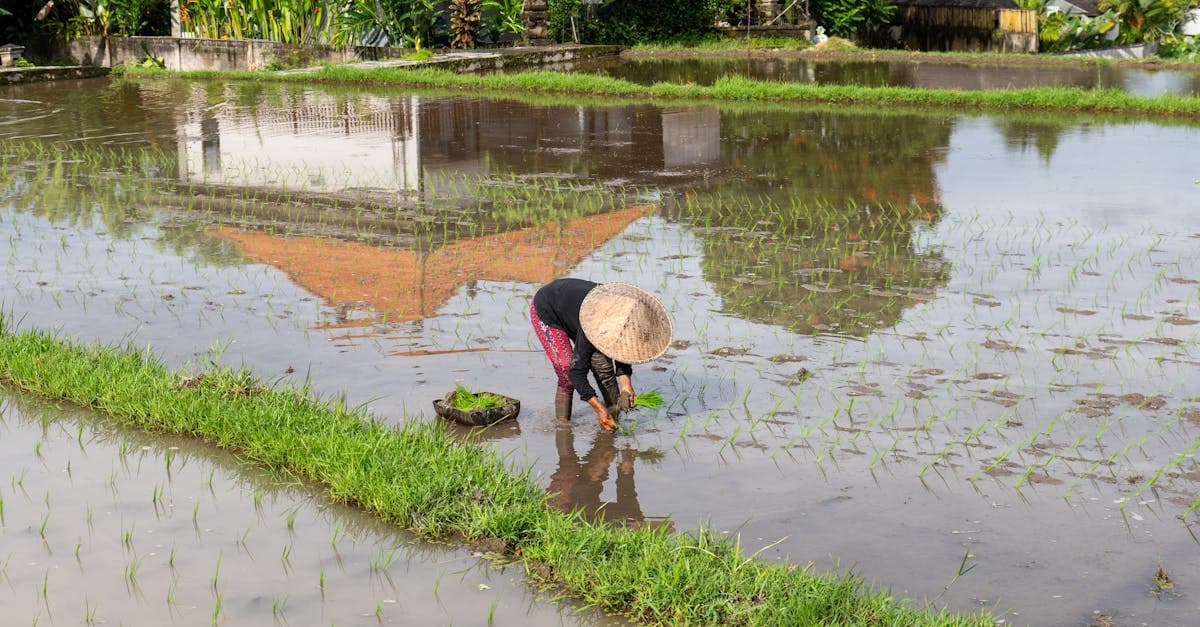
No. Rain in Bali's wet season arrives in afternoon or evening bursts, typically two to three hours, and mornings usually stay warm and clear. Sunrise temple visits, early surf sessions, and breakfast outdoors are all fine. The sky settles; the heat stays.
January is the soggiest month of the year. Even then, the rain concentrates into those afternoon windows rather than lingering all day. Ubud's rice terraces hit their deepest, most vivid green during this period, which makes the wet season genuinely the best time for landscape photography in the region.
West coast surf is worth flagging. Canggu and Kuta's breaks are at their strongest during the wet season, driven by consistent swell conditions, and for Kiwis who travel with a board the timing lines up well.
Crowds drop sharply outside the NZ school calendar, and return flights from Auckland sit at their most affordable of the year during this window. Pack a lightweight waterproof layer, book activities for mornings, and leave afternoons open. The wet season is underrated, and it genuinely suits couples, solo travellers, and surfers who can step outside the school holiday windows to travel.

May and September offer the best value for Kiwi travellers: both fall within the dry season with reliable weather, yet flights run 30 to 40 percent below the July peak. July suits families tied to school holidays but comes with peak pricing and crowds. October is another strong option, offering late dry-season reliability at moderate prices.
Bali has a dry season from May to October and a wet season from November through April. Temperatures remain consistent year-round at 29 to 31 degrees Celsius during the day, with the ocean holding steady at 27 to 29 degrees. The main differences between seasons are rain timing, prices, and crowd levels rather than temperature.
Return flights from Auckland to Denpasar vary significantly by season. In peak months like July and August, fares run NZ$1,200 to $1,900. In shoulder months like May and September, fares drop to around NZ$750 to $1,100. The cheapest fares of the year fall in January and February, around NZ$600 to $900.
January and February are the cheapest months for flights from Auckland to Bali, with return fares running around NZ$600 to $900. These months fall in Bali's wet season, with regular afternoon rain but clear mornings. Accommodation prices are also at their lowest during this period.
Nyepi is the Balinese Hindu New Year and Day of Silence, falling on 19 March 2026. Denpasar Airport closes for a full 24 hours on this date, with airlines cancelling or rescheduling affected flights rather than simply delaying them. Travellers should book arrival by 17 March or departure from 20 March to avoid disruption.
Yes, Denpasar Airport closes for a full 24 hours on 19 March 2026 for Nyepi. The disruption window is wider than just Nyepi Day itself: flights the day before fill quickly as travellers arrive ahead of the closure, and 20 March sees backlogs as airport operations resume. A buffer day either side is recommended.
The Ogoh-ogoh parade takes place on the evening before Nyepi, which in 2026 falls on 18 March. Handcrafted demon effigies, some standing several metres tall, are carried through village streets and burned at dusk. It is one of the most visually striking events in the Balinese calendar and unlike anything found elsewhere in the region.
October school holidays offer the best value for Kiwi families. Late dry-season weather is near-equivalent to July at meaningfully lower prices, and two to three months notice is usually enough for bookings. July is the most popular option but requires four to six months of advance booking and carries the highest prices of the year.
Yes, Bali's wet season from November to April suits travellers chasing lower prices, fewer crowds, and landscapes at peak green. Mornings are often clear with rain arriving in the afternoon, making morning-first itineraries practical. Return flights and accommodation are significantly cheaper than during the dry season.
The Ubud Writers and Readers Festival runs in October with an internationally regarded author lineup. It is the strongest single reason for Kiwi travellers wanting more than beach time to target October specifically. Accommodation around Ubud fills quickly once the programme is announced, so early booking is recommended.
The Bali Arts Festival runs from June into July in Denpasar, covering dance, gamelan, and craft exhibitions across several weeks. It offers a solid reason to visit Denpasar, which many travellers skip. The festival coincides with the early dry season, making June a culturally rich month to visit.
An eSIM is generally more cost-effective than NZ carrier roaming for a 10 to 14-day Bali trip. NZ carrier travel passes from Spark, One NZ, and 2degrees cost NZ$80 to $100 for 10 days with limited data, while a Hello Roam Indonesia eSIM costs NZ$25 to $45 with 5 to 10GB total. An eSIM also activates automatically on arrival, avoiding airport SIM queues.
Hello Roam's Indonesia eSIM costs approximately NZ$25 to $45 and includes 5 to 10GB of data, sized to cover a 10 to 14-day trip. It is priced in NZD and backed by NZ-based customer support. Setup is via a QR code scan before departure, so you arrive already connected without queuing at the airport.
eSIM-compatible devices include iPhone XS or later, Samsung Galaxy S20 or later, and Google Pixel 3 or later. Older or budget Android phones require a physical SIM card. It is worth confirming your device's eSIM compatibility before departure to avoid needing a local SIM on arrival.
A Telkomsel SIM purchased at the Denpasar Airport arrivals counter costs around NZ$10 to $20 for 5 to 15GB and provides the strongest coverage in east Bali and Nusa Penida. The trade-off is queuing and device setup after a long flight. An eSIM like Hello Roam at NZ$25 to $45 offers similar value with the convenience of pre-trip activation.
Ubud sits several hundred metres above the coast and runs 2 to 4 degrees cooler than areas like Kuta or Seminyak. A light layer for evenings is recommended if your itinerary includes highland temples or rice terrace walks. This temperature difference is the main practical consideration when packing for a mixed beach and highlands trip.
Galungan is one of the most visually striking events in the Balinese Hindu calendar. During the celebration, penjor poles (decorated bamboo arches strung with offerings and greenery) line every road on the island, and village ceremonies run for days. Kuningan follows ten days later, marking the close of the celebration. Dates follow the Pawukon cycle and shift annually.
Four to six months of advance booking is the minimum recommended lead time for July travel. July is the peak month for New Zealand visitors, coinciding with mid-year school holidays and dry-season weather. Popular villas and resorts fill well in advance, and flights run at the top of their annual price range.
The direct flight from Auckland to Denpasar takes approximately 9 hours 20 minutes, operated by Jetstar and Garuda Indonesia. Air New Zealand does not fly this route. Travellers from Wellington and Christchurch connect through Auckland or Sydney, adding three to six hours to total journey time.
The Bali Kite Festival takes place at Padanggalak Beach in Sanur through July and August. Teams fly enormous handmade kites in size and design categories, drawing significant local participation. It is worth an afternoon visit for travellers in south Bali during the dry season peak months.
HelloRoam: your trusted travel eSIM that keeps you online across borders.
Explore Plans