Best eSIM for Europe 2026: the Complete Guide for Indian Travellers

Written by: James Harrington


11 min read

HelloRoam is a global eSIM provider offering instant mobile data in 170+ countries. Buy prepaid travel eSIM plans with no extra fees, no contracts, and instant activation on any eSIM-compatible device.
11 min read

Check your phone before buying any eSIM plan. The divide between flagship and budget Android in India is wider than most travellers realise, and committing to a plan for an incompatible device wastes money with no guaranteed refund.
Apple's compatibility list is clean. Every iPhone from the XS (2018) onward supports eSIM; US-market iPhone 14 variants are eSIM-only with no physical SIM slot, while Indian retail models keep a dual configuration of one nano-SIM and one eSIM profile. To check on your iPhone, open Settings, go to Cellular, then look for 'Add eSIM' or 'Add Data Plan'. If that option appears, the device qualifies.
Google's Pixel line is uncomplicated. Pixel 3 and every model since support eSIM with a clean activation flow on stock Android.
OnePlus draws a clear line at the flagship tier. The OnePlus 11, 12 and the Open foldable all support eSIM on their India retail variants. The Nord CE series, Nord N20 and most budget Nord models do not; this is a hardware limitation, not a software restriction.
Realme and Poco present the clearest restriction. No Realme model widely sold in India supports eSIM, and the same is true across the Poco range. Both brands dominate the budget and mid-range smartphone segment, meaning a large share of Indian travellers carrying a popular affordable Android cannot use an eSIM for Europe travel.
On Android, the check is quick. Open Settings, go to Connections, then SIM card manager. If an 'Add eSIM' or 'Download SIM' option is present, the device supports it. Verify this before purchasing; most providers do not refund eSIM QR codes once they have been scanned.

Samsung is the safest eSIM option in the Indian Android market. The Galaxy S20 through S24 series all support eSIM on handsets sold in India without exception. In the A-series, the Galaxy A54 and A55 are compatible; the Galaxy A34 and every model below it are not.
The OnePlus split is clean. The OnePlus 11, 12 and the Open foldable support eSIM on their Indian retail units; the Nord CE 3, Nord N20 and budget Nord models do not. This is a hardware absence, not a configuration that any software update can address.
Xiaomi requires an extra step. The Xiaomi 13 and 14 series support eSIM on international variants, but the same phones sold through Indian retail channels may not include the required hardware. Open Settings, navigate to SIM card manager, and confirm the 'Add eSIM' option is present before committing to a plan.
Redmi and Poco offer no eSIM support on any India-sold variant. The Redmi Note 12, Redmi Note 13, Poco X and M series all fall into this category. Sub-Rs 20,000 Android phones bought in India are almost universally without eSIM capability. If you're upgrading ahead of a Europe trip, add eSIM support to the requirements list alongside storage and battery life.
Indian carrier roaming costs add up faster than most travellers budget for. The headline pack prices look manageable on paper; the daily data throttling thresholds are what push the real cost up on any trip beyond a week.
Jio's International pack for Europe costs Rs 4,099 for 30 days. Data throttles to 128 kbps after 2 GB per day, which is functional for WhatsApp text but not for real-time navigation or retrieving booking confirmations.
Airtel's World Pack has two tiers. The 10-day option costs Rs 3,999; the 30-day pack costs Rs 5,999. Both throttle data after 1 GB per day. A 14-day trip typically involves one 10-day pack plus additional days at the standard daily rate, bringing minimum spend to around Rs 5,600. A family of four on separate Airtel packs for the same fortnight would spend between Rs 22,000 and Rs 28,000 combined.
Vi's Europe option is pay-as-you-go at Rs 575 per day, without a bundled pack. BSNL technically covers international roaming but is consistently unreliable across Eastern and Central Europe.
According to mobimatter.com, Europe eSIM plans are available with no roaming charges and full-speed data throughout your trip. Hello Roam's Europe eSIM plans start at Rs 800 for 10 GB and go up to Rs 2,500 for 50 GB, valid for 30 days across more than 40 countries. Data runs at full speed throughout, unlike the throttled tiers on Indian carrier packs.
The most efficient setup is dual-SIM. Keep your Jio or Airtel physical SIM active for incoming calls and OTP messages, and assign the eSIM as the dedicated data line. Indian bank OTPs and UPI verification arrive on your Indian number regardless of which SIM is handling data.

5G is available across all major Western European cities. Mobile speeds on 4G LTE average 90 Mbps in the UK, around 75 Mbps in France, around 65 Mbps in Germany and Spain, and around 55 Mbps in Italy. Those figures hold for urban centres; rural corridors and mountain routes are considerably slower.
Airport Wi-Fi is free at the principal European hubs. Charles de Gaulle, Heathrow, Frankfurt, Schiphol and Madrid Barajas all provide adequate connectivity for messaging and booking checks. Train Wi-Fi is the weak link; Eurail and intercity services are technically connected but too inconsistent for navigation in practice, making mobile data non-negotiable on any rail leg.
Local SIMs make sense for extended stays. According to travel.orange.com, Orange Holiday Europe runs around €29 (roughly Rs 2,700) for 20 GB and is available at French airports and retail branches. Lebara UK offers around 15 GB for roughly Rs 1,200, sold at supermarkets and convenience stores across the UK. Both require identity verification at point of sale, and several EU countries now mandate a local residential address for SIM registration under data protection rules.
That requirement is the practical barrier for Indian travellers. Attempting registration without a local address is not always possible, and the language barrier at airport kiosks compounds the difficulty. The first hour of a European holiday spent in a SIM queue is avoidable.
Buying an eSIM for Europe before departure removes all of it. Activation happens at home over Wi-Fi; you land already connected, with no queue, no foreign ID requirement, and no dependency on overseas retail counters. For multi-country itineraries, Hello Roam's regional plan covers the full Schengen zone and the UK on a single subscription, removing the need to source a new SIM at each border.

The Schengen Zone spans 27 countries. France, Germany, Italy, Spain, the Netherlands, Austria, Belgium, Portugal and Greece are all inside it. The classic Indian Europe itinerary (Paris, Amsterdam, Berlin, Prague, Vienna, Rome) stays entirely within Schengen, meaning a single pan-Europe eSIM covers the whole route under one data allowance.
Switzerland is not in the EU but is inside the Schengen Zone; most pan-Europe eSIM plans include it without a separate add-on. Norway and Iceland sit in the same position: Schengen members, not EU states, covered under most Europe-wide plans by default.
The UK is a distinct case. Post-Brexit, Britain sits outside both the EU and the Schengen Zone, and carriers treat it as a separate data territory. If London is on your itinerary, read the plan's country list before purchasing; 'Europe coverage' does not automatically mean UK coverage. Some plans include the UK, others require an add-on.
The Western Balkans demand the same verification. Serbia, Bosnia, Albania and North Macedonia are outside Schengen. If your trip extends to Dubrovnik's hinterland, a Belgrade stopover, or the Albanian coast, confirm country-level coverage before you book.

Three criteria matter most for an Indian buyer: whether UK coverage is included, whether pricing is in rupees, and whether support is accessible around the clock.
Hello Roam's Europe plans cover the full Schengen Zone, the UK and Switzerland, with pricing in rupees from around Rs 800. QR codes are delivered instantly after payment, and support runs on WhatsApp around the clock. For first-time eSIM buyers paying from an Indian bank account, the setup is calibrated for the Indian market in a way that most competitors are not.
Airalo is the most globally recognised eSIM marketplace, covering 200-plus countries. Pricing appears in US dollars, payment options skew Western, and the platform is not optimised for Indian device models. It works, but it was built for a different audience.
Holafly leads with unlimited data and no throttling, at prices between roughly Rs 1,700 and Rs 2,400. That is a genuine differentiator for heavy users. There is no India-facing support channel and no INR pricing at checkout.
As listed on matrix.in, Matrix.in opens with a headline of Rs 118. Full plans with practical data allowances cost considerably more, throttling terms are not prominently disclosed, and educational resources for first-time buyers are sparse.
For stays exceeding 30 days in a single country, a local SIM from Orange or Lebara can undercut all of the above on cost. Multi-country itineraries of under a month are where a pan-Europe eSIM earns its value.

For most trips, yes. The gap is considerable.
The Jio and Airtel roaming packs discussed in the previous section carry costs in the Rs 4,000 to Rs 6,000 range for 10 to 30 days, with data throttled once daily limits are exhausted. A regional Europe eSIM providing sufficient data for a two-week holiday at full speed costs around Rs 1,500 for 30 days.
Per person on a 14-day trip, the saving works out to roughly Rs 3,000 to Rs 6,500 depending on which Indian carrier you'd otherwise use. Across a family of four, switching from roaming packs to individual eSIMs could save Rs 14,000 to Rs 20,000 on a single Europe holiday.
Carrier roaming holds one genuine advantage: zero effort. Your Indian SIM activates on landing, voice calls are bundled, nothing needs configuring. For a two-day business trip with light data use, that convenience may be worth the premium.
For anything longer than a weekend, the throttling reality matters. Once daily limits are reached, speeds drop to the levels described in the previous section, well below what navigation or video calls require. A full-speed eSIM handles Google Maps, WhatsApp video and translation apps without interruption throughout the day.
eSIM wins on cost and data volume. Roaming wins on zero-effort setup and bundled voice calls. For a standard fortnight in Europe, the numbers favour an eSIM.
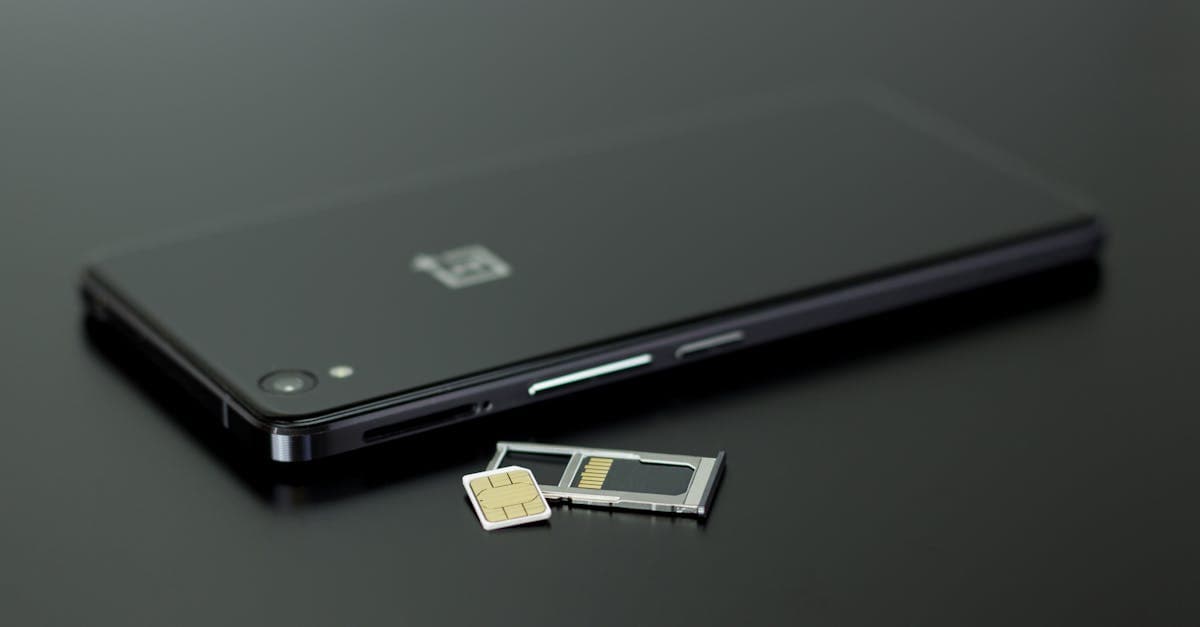
eSIM has several practical disadvantages: QR codes expire within 30 to 90 days of purchase, profiles are locked to the device, there is no local European phone number assigned, and most budget Android phones sold in India lack eSIM hardware. Each limitation is manageable with preparation.
A QR code expires within 30 to 90 days of purchase. Buy a plan weeks before departure and leave it unactivated, and the code may be void when you finally need it. Activate before your trip, not after the confirmation email has been buried in your inbox.
Device loss creates a complication that physical SIMs don't have. A physical SIM can be moved to any unlocked handset in minutes; an eSIM profile is tied to the device. If your phone is stolen or damaged in Florence, re-downloading the profile to a replacement requires remote support from the provider. Keep that contact saved in email or with a travel companion, not only in the phone itself.
Data is the only output. An eSIM doesn't assign a European phone number; voice calls run through WhatsApp or Jio Meet. This suits most travellers, but SMS-based verification services that require a local European number won't work.
Group travel requires individual plans; a family of four needs four separate purchases, ideally coordinated before departure.
The initial profile download requires a WiFi connection, as outlined in the setup steps above. Major European airports are generally adequate for this; smaller regional hubs less reliably so.
Device compatibility, as covered in the earlier sections, remains the hardest barrier for many Indian buyers. Most budget Android handsets lack eSIM support. Verify in your phone's settings before purchasing a plan.
When a profile stops working mid-trip, the fix is entirely remote. Confirm whether the provider offers WhatsApp or live chat before buying; a response window measured in hours is a poor outcome when you're without data abroad.

The process takes under ten minutes. You can complete it at home, well before the packing starts.
Confirm eSIM support first, using the Settings path described in the compatibility section. If your phone clears that check, proceed in order:
Timing matters. Do not activate the day you buy it. Wait until one to two hours before boarding, or use airport Wi-Fi in Europe for the initial setup if you prefer to activate on arrival.
After activation, set the eSIM as your mobile data line and keep your Jio or Airtel SIM as the primary for calls and SMS. OTP messages from your Indian bank and UPI authentication continue to reach your Indian number, uninterrupted.

For Indian travellers, Hello Roam is the strongest option because it covers the full Schengen Zone, the UK and Switzerland with pricing in rupees from around Rs 800, instant QR code delivery, and 24/7 WhatsApp support. Airalo is the most globally recognised marketplace but prices in US dollars and is not optimised for Indian devices. Holafly offers unlimited throttle-free data at Rs 1,700 to Rs 2,400 but has no INR checkout or India-facing support.
Yes, for most trips the saving is significant. Indian carrier roaming packs from Jio and Airtel cost Rs 4,000 to Rs 6,000 for 10 to 30 days and throttle data after 1 to 2 GB per day. A regional Europe eSIM providing full-speed data for a two-week trip costs around Rs 1,500 for 30 days, saving a single traveller roughly Rs 3,000 to Rs 6,500. Roaming has one advantage: zero setup effort and bundled voice calls, which may suit short business trips.
The main disadvantages are that QR codes expire within 30 to 90 days of purchase, eSIM profiles are locked to the device and cannot be moved to another handset if your phone is lost or damaged, no local European phone number is assigned so SMS-based local verification will not work, and most budget Android phones sold in India lack eSIM hardware. The initial profile download also requires a Wi-Fi connection before you travel.
First confirm your phone supports eSIM by opening Settings, going to SIM card manager or Cellular, and checking for an Add eSIM option. Then purchase a plan from a provider such as Hello Roam, Airalo or Holafly before departure. After payment you receive a QR code by email; scan it over Wi-Fi to download the profile to your device. Activate the eSIM before you board so you land already connected.
On iPhone, open Settings, go to Cellular and look for Add eSIM or Add Data Plan. On Android, open Settings, go to Connections, then SIM card manager and check for an Add eSIM or Download SIM option. If neither option appears, the device does not support eSIM. Verify compatibility before purchasing, as most providers do not refund QR codes once they have been scanned.
Every iPhone from the XS (2018) onwards supports eSIM. US-market iPhone 14 models are eSIM-only with no physical SIM slot. Indian retail iPhone 14 models retain a dual configuration of one nano-SIM and one eSIM profile. All models from XS through to the current range are compatible with eSIM plans for Europe.
The Galaxy S20 through S24 series all support eSIM on handsets sold in India without exception. In the A-series, the Galaxy A54 and A55 are compatible, while the Galaxy A34 and all models below it are not. If you are upgrading before a Europe trip, check the model sits at A54 level or above, or choose any flagship S-series handset.
Only flagship OnePlus models sold in India support eSIM. The OnePlus 11, 12 and the Open foldable are all compatible. The Nord CE series, Nord N20 and most budget Nord models do not support eSIM; this is a hardware limitation that cannot be resolved through a software update.
No. No Redmi, Poco or Realme model widely sold in India supports eSIM. These brands dominate the budget and mid-range segment, meaning a large share of Indian travellers carrying popular affordable Android phones cannot use an eSIM for Europe travel. Upgrading to a compatible device requires moving to a Samsung mid-range A54 or above, or an OnePlus flagship.
Not automatically. Post-Brexit, the UK sits outside both the EU and the Schengen Zone and carriers treat it as a separate data territory. Some pan-Europe eSIM plans include the UK in their country list and others require a paid add-on. If London is on your itinerary, read the plan's coverage list carefully before purchasing rather than assuming Europe coverage includes Britain.
Yes, in most cases. Switzerland and Norway are members of the Schengen Zone even though they are not EU states, and most pan-Europe eSIM plans include both countries without a separate add-on. Always confirm the specific plan's country list before purchase, as coverage varies by provider.
Yes, this is the recommended dual-SIM setup. Keep your Jio or Airtel physical SIM active for incoming calls and OTP messages, and set the eSIM as the dedicated data line. Indian bank OTPs and UPI verification codes arrive on your Indian number regardless of which SIM is handling data, so banking apps continue to work normally.
Jio's International pack for Europe costs Rs 4,099 for 30 days. Data is throttled to 128 kbps after 2 GB per day, which is sufficient for WhatsApp text messages but not for real-time navigation or retrieving booking confirmations. Once the daily threshold is crossed, navigation and video calls become effectively unusable.
Airtel's World Pack has two tiers: Rs 3,999 for 10 days and Rs 5,999 for 30 days, both throttling data after 1 GB per day. A 14-day trip typically requires one 10-day pack plus additional daily charges, bringing minimum spend to around Rs 5,600 per person. A family of four on separate Airtel packs for a fortnight would spend between Rs 22,000 and Rs 28,000 combined.
5G is available across all major Western European cities. 4G LTE averages around 90 Mbps in the UK, 75 Mbps in France, 65 Mbps in Germany and Spain, and 55 Mbps in Italy. These figures apply to urban centres; rural corridors and mountain routes are considerably slower. Train Wi-Fi on intercity services is too inconsistent for navigation, making mobile data essential on any rail leg.
Unlike a physical SIM, an eSIM profile is locked to the device and cannot simply be moved to a replacement handset. If your phone is lost or damaged, re-downloading the profile requires contacting the provider's remote support team. Save your provider's support contact in email or with a travel companion before departure, not only in the phone itself.
No. A travel eSIM provides data only and does not assign a local European phone number. Voice calls and messaging run through apps such as WhatsApp or Jio Meet over the data connection. SMS-based verification services that specifically require a local European number will not function on a travel eSIM.
The Schengen Zone covers 27 countries including France, Germany, Italy, Spain, the Netherlands, Austria, Belgium, Portugal, Greece, Switzerland, Norway and Iceland. A classic Indian Europe itinerary taking in Paris, Amsterdam, Berlin, Prague, Vienna and Rome stays entirely within Schengen, so a single pan-Europe eSIM covers the whole route under one data allowance. The UK and Balkans countries such as Serbia and Albania are outside Schengen and require separate coverage confirmation.
HelloRoam: your trusted travel eSIM that keeps you online across borders.
Explore Plans