The Ultimate Holiday Packing List for Irish Travellers in 2026

Written by: David Chen


16 min read

Table of content
Quick Answer: holiday packing list

According to smartertravel.com, a good holiday packing list covers four categories: documents, clothing, toiletries, and tech. Get those right and you'll skip the overpriced airport toothpaste and the panicked WiFi hunt in arrivals.
For Irish travellers, bag allowances shape the list before you've packed a single item. Ryanair's free tier is a personal item only, small enough to sit under the seat in front. That reality changes how you approach the whole exercise.
Connectivity belongs on the list too, and most guides leave it off entirely. Your Irish SIM handles Spain and Portugal fine under EU roaming rules. Turkey, the USA, Thailand, Japan? Those sit outside that protection. Hello Roam offers eSIM plans from $4.00 for 3GB over 30 days, activated via QR code with no physical SIM swap required.
For anyone new to the technology, What Is An Esim explains how it works in plain terms. Sorting connectivity before departure removes one more thing to worry about on arrival.
Before You Start Packing: 3 Essentials to Check First
Before you open a suitcase, three checks prevent most of the classic pre-travel oversights.
Check 1: Baggage policy
Ryanair charges €25 to €40 per checked bag, each way, on most routes from Dublin, Cork, and Shannon. That's potentially €80 on a return before you've bought a single thing in resort. A structured packing checklist helps you decide whether that fee is worth paying or whether a well-planned carry-on gets you there for nothing. This guide is built around the specific constraints of flying from Irish airports on Ryanair, Aer Lingus, and Jet2, where that decision carries real financial weight.
Check 2: Roaming rules by destination
EU destinations such as Spain, Greece, France, and Portugal fall under standard EU roaming rules. Your Irish SIM works at home rates with no extras required. Non-EU destinations are a different calculation: Turkey, the USA, Thailand, and Japan all sit outside that coverage. An eSIM goes on the packing list alongside your adapter and travel insurance documents.
Hello Roam's eSIM activates via QR code before you leave home, with no SIM card to source in advance and no dependency on airport WiFi at the destination. It's one of the few pre-travel preparations that's genuinely sorted in minutes.
Check 3: Entry requirements
Japan's visa exemption is reinstated for Irish passport holders. Turkey requires an e-visa booked online in advance. A quick check against your destination's official entry requirements takes ten minutes and prevents the worst possible outcome at check-in.
67% of travellers forget at least one essential item per trip. A checklist converts that near-certainty into an edge case.
Baggage Allowances for Ryanair, Aer Lingus and Jet2
Three airlines, three very different policies on what you can bring without paying extra.
Ryanair's free allowance covers a personal item only: small enough for under the seat, nothing more. A standard 10kg cabin bag requires either Priority boarding or a paid bag add-on, priced at €8 to €50 depending on route and booking timing. Book it in advance rather than at the gate. The gate rate is always the higher end.
Aer Lingus includes a 10kg cabin bag on most standard fares, which is a meaningful step up. Overhead bin access requires a Plus fare or an early boarding add-on, but the base allowance covers most short-haul trips without that extra cost.
Jet2 is the most generous of the three for checked luggage. Most package holiday fares include a 22kg checked bag as standard, with no add-on required. For Canary Islands routes from Belfast and other regional airports, that allowance is baked into the price and changes the packing calculation entirely.
A practical step before any flight: weigh your bag at home on bathroom scales and measure with a tape measure. Gate charges run higher than pre-booked fees. Packing within carry-on limits saves €50 to €100 per return trip on routes where bags are charged separately, making it one of the most directly impactful decisions on a travel budget.
One hard rule for carry-on liquids: all containers at 100ml or less, placed in a single 1-litre clear resealable bag, declared at the security scanner.
What Documents and Travel Essentials Should You Pack?
According to skyscanner.ie, essential travel documents for Irish holidaymakers are a valid passport, an EHIC or GHIC card, a travel insurance certificate, digital copies of any required visas, and mobile boarding passes. Check your passport expiry date before you book: many countries require six months of validity beyond your return date, and Ireland's Passport Office recommends allowing at least six weeks to renew. Spring is peak renewal season, so processing times stretch exactly when most people are planning summer trips.
EHIC and GHIC cards are free to order from hse.ie and cover emergency medical treatment in EU and EEA countries. They don't replace travel insurance. An EHIC won't cover trip cancellation, baggage loss, or medical repatriation. You need both the card and a policy in place before you fly.
Travel insurance is essential for EU trips too, not just long-haul. A cancelled flight and a missed hotel night adds up fast.
Visa requirements for top Irish destinations in 2026: - Turkey: e-visa required, booked online in advance, approximately $30 - USA: ESTA required, booked online, $21 - Thailand: visa exemption for stays up to 60 days - Japan: visa exemption reinstated for Irish passport holders
Digital documents: Screenshot your e-visa. Save boarding passes to your phone wallet. Download your travel insurance certificate as a PDF before you leave the house. Airport WiFi is not the moment to discover the insurer's app won't load.
Keep copies of all key documents separate from the originals. Email them to yourself or save to cloud storage. If your bag goes missing, an accessible digital backup of your passport and insurance details is genuinely useful rather than theoretical.
Prescription medications deserve their own line on any list. Bring enough supply for the trip plus a few extra days, in original packaging. A GP letter covering what you're carrying makes customs clearance straightforward when travelling outside the EU, and removes any ambiguity with border officials who aren't familiar with the medication.
Clothing, Footwear and Packing Light for Any Destination
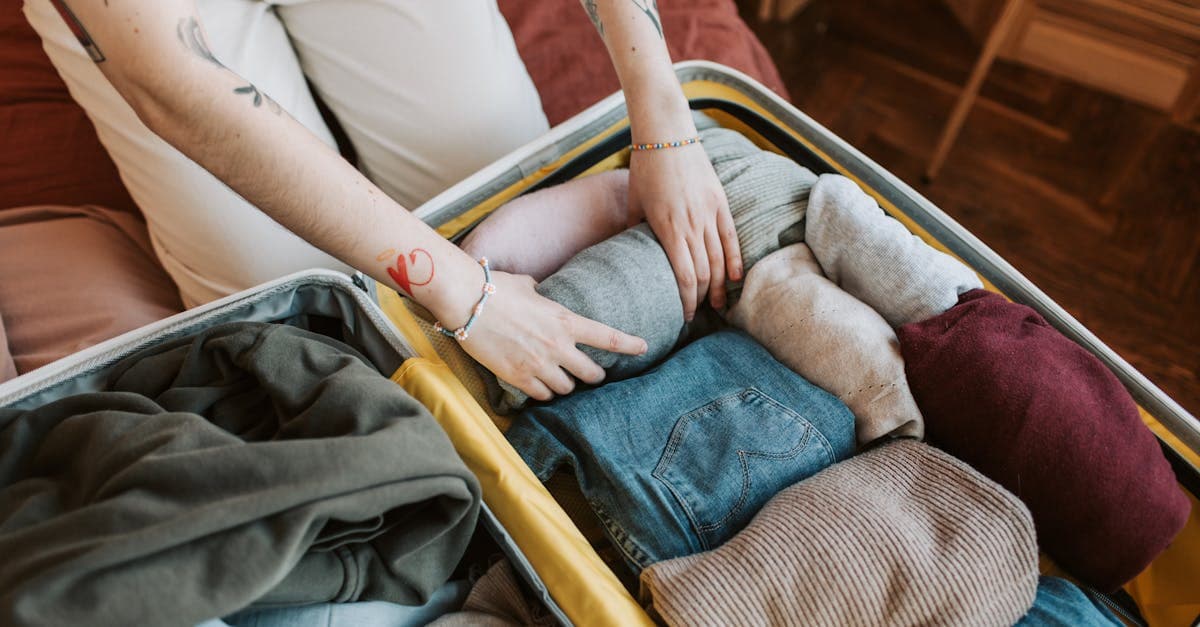
Packing light for any destination means choosing a coordinating colour palette, layering for temperature variation, and matching fabrics to the trip type. Leaving Dublin at 10 degrees and landing into 35-degree heat is a challenge many Irish travellers solve the wrong way: packing for both climates fills the bag before shoes are in. Layer instead.
A zip-up cardigan worn onto the plane handles the cold departure. Off at the gate, into the bag. No separate cold-weather wardrobe taking up space.
Keep the colour palette tight
Five or six items in coordinating neutrals (navy, white, grey, sand) generate far more outfit combinations than the same number of clashing prints. Three bottoms and four tops can cover a fortnight without repeating an outfit. As smartertravel.com recommends, the 5-4-3-2-1 packing method is built on exactly this principle: five sets of socks and underwear, four tops, three bottoms, two pairs of shoes, one hat.
Footwear gets its own budget. Two pairs covers most trips. Three covers everything: beach sandals, walking shoes for sightseeing, one smarter option for evenings. Beyond three, you're carrying weight you don't need.
Match fabrics to your destination
Beach holidays in the Canaries, Turkey or Thailand call for lightweight linen and breathable cotton. City breaks in Rome or Amsterdam need smart-casual layers that take you from a gallery to a restaurant table. Hiking and safari trips require technical fabrics that wick sweat and dry fast.
According to smartertravel.com, quick-dry fabrics pay off on any trip over a week. Wash in the sink, hang overnight, wear again the next morning. That cuts a meaningful portion of any holiday packing list when most of your tops dry by morning.
Reusable silicone bottles keep toiletries within the 100ml liquids rule and save significant weight versus full-size products. Miniatures cost more per millilitre; refillables don't.
What to Wear on the Plane from Ireland
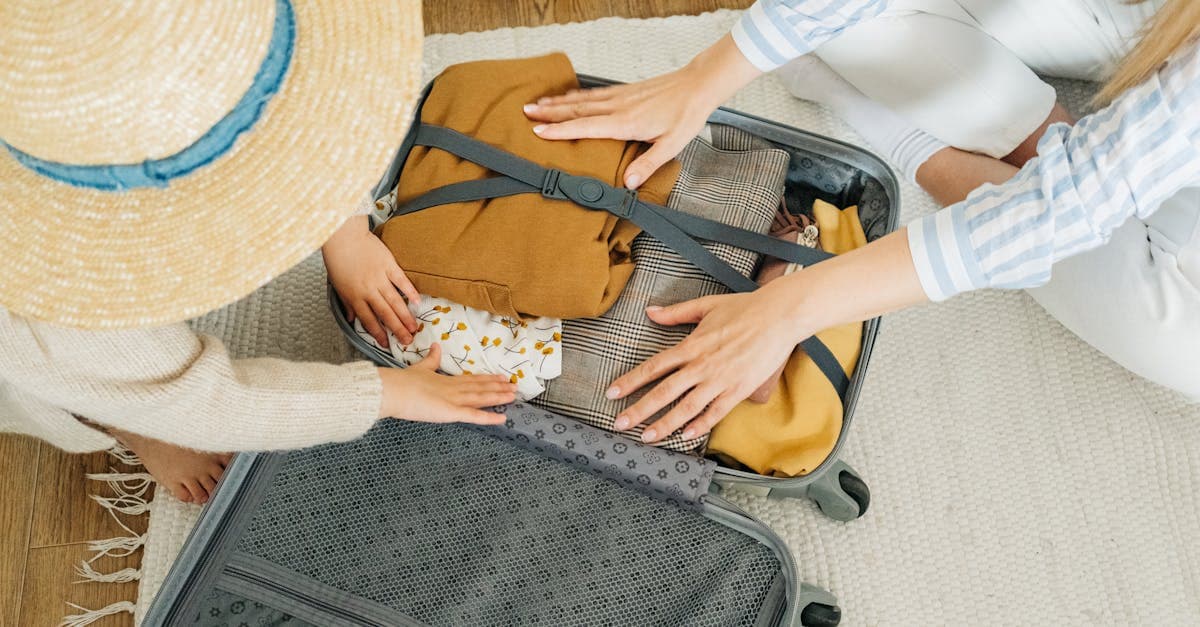
As culture-explorer.co.uk advises, your heaviest shoes belong on your feet through the airport, not sitting in your carry-on. A pair of boots or chunky trainers can weigh roughly 600 to 800 grams. On a 10kg cabin limit, that margin matters.
The same applies to bulky knitwear. Wear the thick jumper through security, take it off once you're airborne, fold it into the overhead bin. Weight the scales never recorded.
A few Dublin-specific tips
Terminal 1 at Dublin Airport runs cold from October through April, even when you're boarding a flight to Tenerife. Bring a layer regardless of your destination. Stripping down at the gate is easy; being cold for two hours at departures isn't.
According to culture-explorer.co.uk, compression socks are worth adding to your holiday packing list for any flight over three hours. Dublin to New York, Dublin to Bangkok: both clear that threshold comfortably. They cut leg swelling and reduce the fatigue you feel on arrival.
Slip-on shoes speed up security considerably. Laces cost you time you didn't need to lose. If lace-up boots are genuinely necessary at your destination, that's a fair trade-off. For most beach or city trips, it isn't.
For flights over four hours, loose and breathable clothing is the right call over anything fitted. A long-haul overnight service in tight jeans is an experience worth avoiding. As culture-explorer.co.uk notes, wearing your bulkiest outfit through the airport remains one of the most effective carry-on tricks going.
Tech, Gadgets and Staying Connected Abroad

Type C and F plugs cover most of continental Europe. Type A and B for the USA. A universal adapter handles both and takes up almost no space. Check your specific destination before packing, though: some countries use less common socket standards and a universal adapter saves you the hunt at arrivals.
A portable power bank is the second most critical piece of kit to pack. Keep it under 100Wh (roughly 27,000mAh) to meet cabin rules on most airlines. Above that threshold, many carriers won't allow it in the hold or the cabin. Check your airline's policy before you travel.
According to culture-explorer.co.uk, noise-cancelling headphones earn their cost on any flight over 90 minutes. Budget earbuds work too. Three hours on a busy service to Faro without audio isolation gets uncomfortable fast.
Download before you leave
According to smartertravel.com, offline content preparation is one of the most-skipped items on any holiday packing list. Netflix downloads, Spotify playlists, Google Maps offline areas and translation apps all need setting up before you leave home. Airport WiFi is too slow and unreliable for last-minute bulk downloads. Do it the evening before you fly.
EU roaming (RLAH, Roam Like at Home) means your Irish SIM from Three, Vodafone, eir or GoMo works at domestic rates across all EU and EEA countries. Spain, France, Greece, Portugal, Croatia and 27 others: no extra charge.
Non-EU destinations are a different story entirely. Turkey, the USA, Thailand, the UAE and Egypt all fall outside RLAH. Irish carrier roaming add-ons for those destinations run at roughly €5.99 to €6 per day, which adds up to around €84 on a two-week trip. Work out your destination's EU status before leaving Ireland and plan your connectivity accordingly.
Do You Need a Travel eSIM for Your Holiday?
An eSIM is a digital SIM built directly into your phone, activated by scanning a QR code before you travel. Nothing to insert, nothing to lose at security. Compatible devices include iPhone XS and later, Samsung/samsung) Galaxy S20 and later, and most Android flagships from 2022 onward.
When you need one (and when you don't)
For EU and EEA destinations, you don't need one. RLAH covers Spain, Greece, France, Italy, Portugal, the Netherlands and more at no extra cost on all major Irish SIMs.
Outside the EU, the maths changes. Turkey, the USA, Thailand and the UAE all fall beyond RLAH, where carrier roaming runs at the daily rate noted in the previous section. Travel eSIM plans for those same destinations typically run 60 to 80 percent cheaper than carrier roaming add-ons, based on the cost structure of regional data plans versus per-day carrier billing.
Hello Roam covers the top non-EU destinations for Irish travellers, Turkey, the USA, Thailand and the UAE included. Pricing is transparent: you choose a plan upfront rather than being charged per day you connect. Delivery is instant via QR code and support is in English. A meaningful contrast to carrier day-pass billing, which stacks up silently across a fortnight away.
One critical step: install your eSIM before leaving Ireland. Trying to scan a QR code on spotty airport WiFi is unreliable, and arriving without data at an unfamiliar airport is a problem worth avoiding after a long flight.
The dual-SIM approach works well. Keep your Irish SIM active for calls and texts from home. Use the eSIM for data abroad. Most modern smartphones handle both simultaneously. To check eSIM compatibility on iPhone: Settings, General, About, then scroll to eSIM. On Android: Settings, Connections, SIM card manager.
Money, Cards and Currency Tips for Irish Travellers

Dublin Airport currency desks will cost you money before your holiday even starts. Rates there are consistently worse than what you'll get through Revolut, Wise, or an ATM at your destination. Leave the desk for genuine emergencies only.
Revolut and Wise
Both offer conversion at rates close to the interbank rate, with minimal or zero fees on standard transactions. Load the card before you fly to lock in your rate. Using it directly at shops and restaurants abroad beats withdrawing large amounts of cash each time.
How Much Cash to Bring
Around €50 to €100 equivalent in local currency covers your arrival day: a transfer from the airport, a meal, a few small costs before you're settled. Beyond that, some destinations stay cash-dominant. Turkish bazaars, Thai street markets, and smaller guesthouses across Southeast Asia often won't accept cards at all. Draw what you need from an ATM at your destination rather than converting at home.
The ATM Choice That Matters
Foreign ATMs often ask whether you'd like to pay in euros. Always say no. That option, called dynamic currency conversion, adds a 3 to 5 percent surcharge to the transaction. The money goes to the ATM operator. Local currency every time.
Credit Card Cover
Some Irish credit cards include basic travel insurance. Check the terms before buying a separate policy or you'll pay for the same cover twice. Keep a backup card in a different part of your bag in case your primary card is lost or blocked mid-trip.
What Is the 5 4 3 2 1 Rule for Packing?
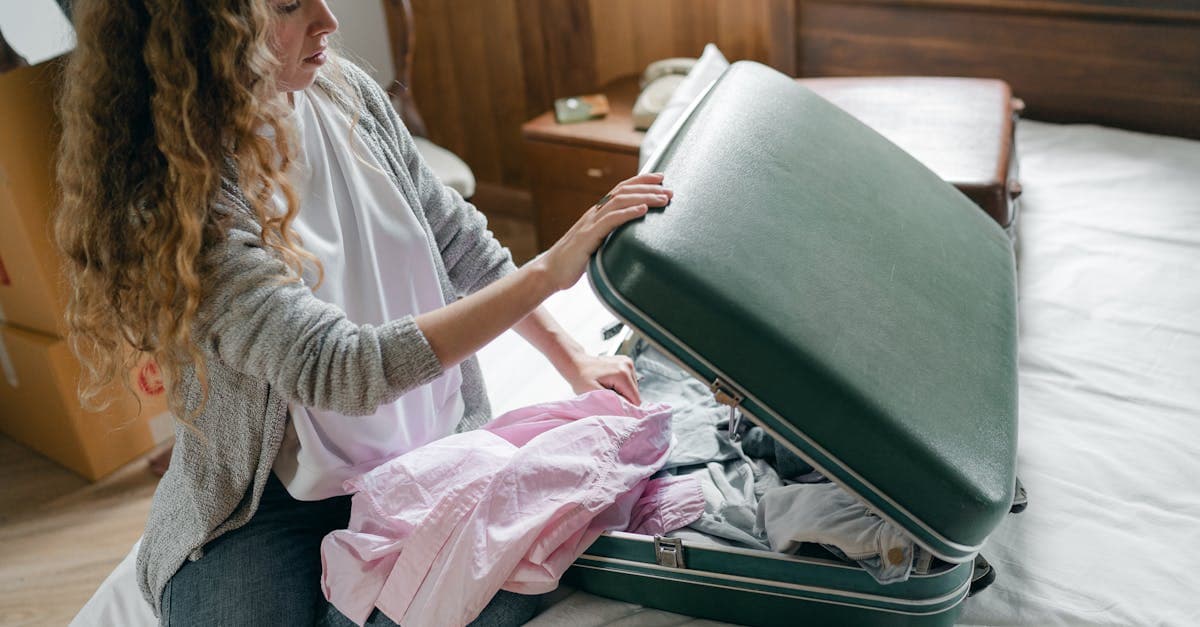
Five tops, four bottoms, three pairs of shoes, two accessories, one formal outfit. That's the 5 4 3 2 1 packing rule, and it scales from a long weekend to a full two-week holiday packing list without adjustment.
Why the Maths Works
Five tops combined with four bottoms generates 20 outfit combinations from just nine clothing pieces. Pair that with the neutral colour palette strategy from the clothing section above, and those combinations actually feel distinct rather than repetitive. Most travellers who try it once don't go back to packing by instinct.
The 3 5 7 Variant
Prefer more variety? The 3 5 7 rule shifts the ratio: three pairs of shoes, five bottoms, seven tops. It suits longer trips or travellers who change outfits more than once a day. Tops are lighter and compress more easily than trousers or jeans, so adding two extra tops costs you far less in bag weight than adding an extra pair of shoes.
The 3 3 3 Rule: Completely Different Context
This one applies to airport security, not wardrobe planning. Each liquid container must hold no more than 100ml. All containers must fit in a single transparent bag of no more than one litre capacity. Declare the bag separately at the security tray. Getting this wrong in a busy queue costs you time and likely the product itself.
When to Adapt
As twinsandtravels.com notes, family holidays need separate calculations per person. Children's clothing doesn't compress the same way, and quantities don't scale down neatly. Beach trips shift the balance: more swimwear and tops, fewer bottoms, possibly only two pairs of shoes. The rule works best as an upper limit to edit down from rather than a minimum to build up to.
What Are the 5 Biggest Packing Mistakes to Avoid?
The five biggest packing mistakes are overpacking for contingencies, leaving connectivity planning until the airport, putting documents in checked luggage, not measuring bag dimensions before departure, and packing full-size toiletries. Most of the luggage rolling through departure halls didn't need to make the trip. Five patterns account for the bulk of it.
Mistake 1: Packing just in case. Around 72 percent of Irish travellers report overpacking, and most of the items added for contingencies come home untouched. Pack for what you'll actually do, not for every scenario you can imagine.
Mistake 2: Leaving connectivity planning until the airport. Roaming add-ons bought at departure cost more. eSIM setup, as noted in the tech section above, requires reliable WiFi that airport terminals rarely provide consistently. Sorting your data plan at home takes ten minutes and saves frustration.
Mistake 3: Documents in checked luggage. Passport, travel insurance certificate, e-visa screenshots, and your mobile boarding pass all belong in your carry-on or personal item. Checked bags get delayed. Replacement documents don't arrive before your flight.
Mistake 4: Not checking bag dimensions before you leave home. Ryanair gate staff measure bags and charge for oversized ones on the spot. A tape measure at home takes 30 seconds and potentially saves the fees discussed in the baggage section earlier.
Mistake 5: Full-size toiletries. A 250ml shampoo bottle fails the liquids rule and adds dead weight. Transfer products into 100ml reusable bottles, or switch to solid shampoo bars, which bypass the liquids rule entirely and survive multiple trips without leaking.
Checking phone compatibility for eSIM before any non-EU trip belongs on the same list. Queuing for a local SIM at a busy destination airport is avoidable with five minutes of research done at home before you pack.

Travel writer and former digital nomad. 10 years exploring destinations across 6 continents. Specializes in budget travel, expat life, and off-the-beaten-path experiences for American travelers.
Read full bio→Frequently Asked Questions
The 5-4-3-2-1 packing method means bringing five sets of socks and underwear, four tops, three bottoms, two pairs of shoes, and one hat. It works by keeping your colour palette in coordinating neutrals so every item mixes and matches. Three bottoms and four tops can cover a fortnight without repeating an outfit.
The 3-5-7 rule is a packing light framework that limits the number of items you bring to fit within carry-on allowances. A similar approach recommended for Irish travellers is choosing three bottoms, four or five tops, and no more than two or three pairs of shoes, all in coordinating neutrals. A tight colour palette generates far more outfit combinations from fewer pieces.
The 3-3-3 rule for flights relates to the liquids restriction at airport security: all containers must be 100ml or less, placed in a single 1-litre clear resealable bag, and declared at the scanner. This rule applies at all Irish airports including Dublin, Cork, and Shannon. Reusable silicone bottles help you stay within the limit and avoid buying expensive miniatures at the airport.
The five biggest packing mistakes are: not checking your airline baggage policy before packing, packing separate wardrobes for cold departures and hot destinations instead of layering, ignoring roaming rules for non-EU countries, skipping offline content downloads before flying, and buying overpriced miniature toiletries at the airport instead of using refillable silicone bottles. Not weighing your bag at home is also a costly oversight, as gate charges are always higher than pre-booked fees.
Ryanair's free allowance covers a personal item only, small enough to fit under the seat in front of you. A standard 10kg cabin bag requires either Priority boarding or a paid bag add-on, priced at €8 to €50 depending on route and booking timing. Booking the add-on in advance is always cheaper than paying at the gate.
Yes. EU roaming rules (Roam Like at Home) mean your Irish SIM from Three, Vodafone, eir, or GoMo works at domestic rates across all EU and EEA countries including Spain, France, Greece, Portugal, and Croatia. No extra charges apply for calls, texts, or data used within these countries.
Yes. Turkey, the USA, Thailand, and Japan all fall outside EU roaming rules, so your Irish SIM will incur roaming add-on charges of approximately €5.99 to €6 per day. An eSIM plan from Hello Roam starts at $4.00 for 3GB over 30 days and is activated via QR code before you leave home, with no physical SIM swap required.
Essential travel documents include a valid passport, an EHIC or GHIC card, a travel insurance certificate, digital copies of any required visas, and mobile boarding passes. Many countries require six months of passport validity beyond your return date. Turkey requires an e-visa booked online in advance, the USA requires an ESTA, and Japan has reinstated its visa exemption for Irish passport holders.
You need both. The EHIC or GHIC card covers emergency medical treatment in EU and EEA countries and is free to order from hse.ie, but it does not cover trip cancellation, baggage loss, or medical repatriation. Travel insurance covers those additional risks, and having both in place before you fly gives you full protection even for EU destinations.
Turkey requires an e-visa for Irish passport holders, booked online in advance at approximately $30. It must be arranged before you travel and saved as a digital copy or screenshot on your phone. In contrast, Japan has reinstated its visa exemption for Irish passport holders, and Thailand offers a visa exemption for stays up to 60 days.
Wear your heaviest shoes and bulkiest knitwear through the airport to avoid using up your carry-on weight allowance. Slip-on shoes speed up security considerably, and loose, breathable clothing is recommended for flights over four hours. Compression socks are worth adding for any flight over three hours to reduce leg swelling and arrival fatigue.
Type C and F plugs cover most of continental Europe, while the USA uses Type A and B plugs. A universal travel adapter handles both and takes up very little space in your bag. Always check your specific destination before travelling, as some countries use less common socket standards.
Irish carrier roaming add-ons for non-EU destinations such as Turkey, the USA, Thailand, and Egypt typically run at approximately €5.99 to €6 per day. On a two-week trip that adds up to around €84. An eSIM plan is a cost-effective alternative, with Hello Roam offering plans from $4.00 for 3GB over 30 days.
All liquid containers must be 100ml or less, placed in a single 1-litre clear resealable bag, and declared at the security scanner. This rule applies at Dublin, Cork, and Shannon airports. Reusable silicone bottles allow you to bring your preferred toiletries within the limit without paying airport prices for miniatures.
Pack within carry-on limits using a structured packing checklist and a tight clothing colour palette that generates multiple outfit combinations from fewer items. Wear your heaviest shoes and bulkiest layers onto the plane rather than packing them. Staying within carry-on limits saves €50 to €100 per return trip on routes where bags are charged separately.
Most Jet2 package holiday fares include a 22kg checked bag as standard with no add-on required. For Canary Islands routes from Belfast and other regional airports, this allowance is included in the base price. Jet2 is the most generous of the main Irish holiday airlines for checked luggage.
Yes. Netflix downloads, Spotify playlists, Google Maps offline areas, and translation apps should all be set up the evening before you fly. Airport WiFi is too slow and unreliable for last-minute bulk downloads. Offline maps are especially useful for non-EU destinations where mobile data costs more without an eSIM plan.
Layer instead of packing separate wardrobes for both climates. Wear a zip-up cardigan or thick jumper through the airport and remove it once you are airborne. Choose a coordinating colour palette of five or six items in neutrals such as navy, white, grey, and sand to generate more outfit combinations from fewer pieces.
Sources
- The Ultimate Packing List — smartertravel.com
- The Holiday Packing List — twinsandtravels.com
- skyscanner.ie — skyscanner.ie
- I'm a travel expert - here's my packing list - Culture Explorer — culture-explorer.co.uk


Stay Connected with Travel Data
View all destinations

United States

United Kingdom